


Origin
10 practices from Cusco that celebrate harmony with nature
Long before "eco-friendly" became a trend, Andean communities were living in sync with the land. In the highlands of Cusco, sustainability was not a campaign—it was a way of life. Their traditions, rooted in observation, respect, and reciprocity, created a cultural framework where humans are not above nature but part of it.
This Earth Month, we journey into the heart of Andean ecological wisdom. From terracing mountainsides to aligning planting cycles with the stars, the people of the Andes have cultivated balance for centuries. These ten ancestral practices are more than history—they’re living proof that sustainability is not a new idea. It’s an old truth we’re just beginning to rediscover.
1. Ayni – reciprocal labor and environmental ethics
In Andean culture, ayni is the foundation of life. It means reciprocity—not just between people, but between humans and the natural world. When a farmer plants potatoes, she first gives thanks to the land. When the land bears fruit, it is seen as a response to that offering.
Ayni is not charity—it’s mutual responsibility. Families work on each other's land in turns, and communities build irrigation canals or harvest together. The same logic applies to the earth: you give, and the land gives back [1].
2. Pachamama rituals – honoring the earth spirit
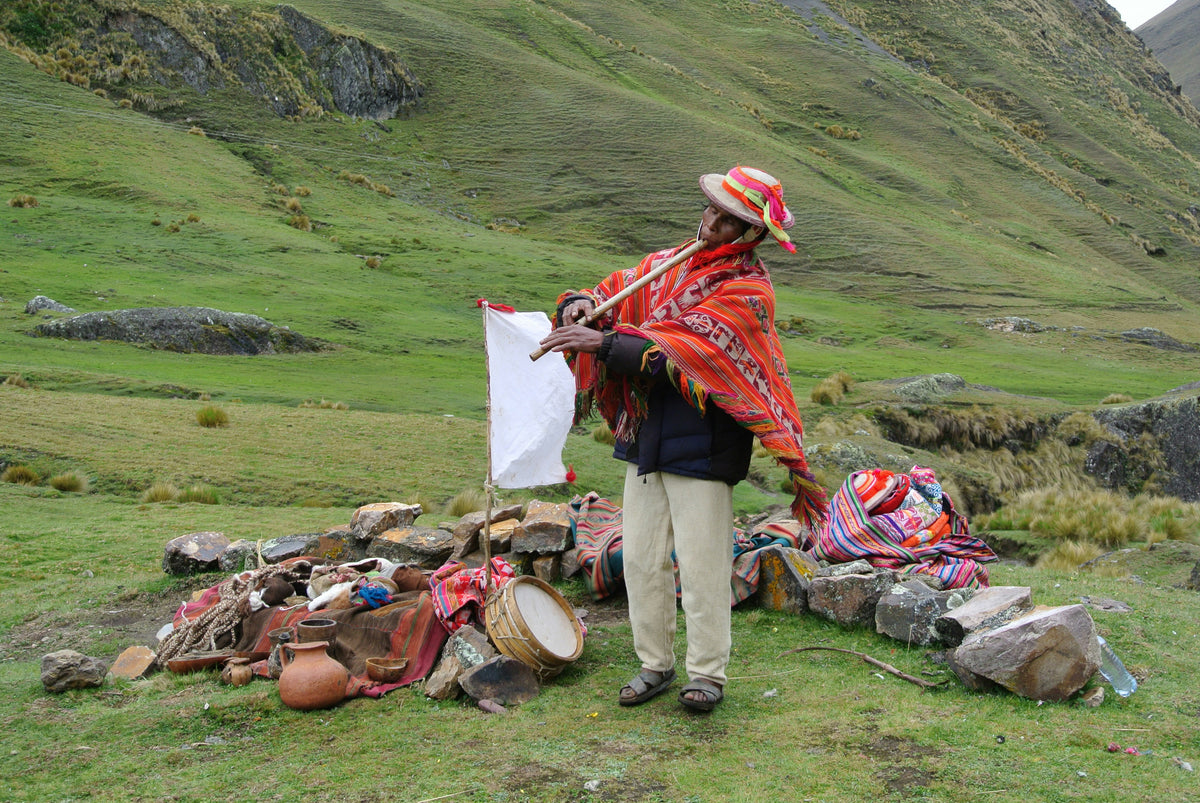
Before planting or harvesting, many Andean farmers make a payment to Pachamama —the Earth Mother. This ritual offering includes coca leaves, chicha, seeds, and sweets, symbolizing gratitude and asking permission to take from the land [2].
Often held at sacred places like mountain springs or rock altars, these ceremonies remind participants that the earth is a living being, not an inert resource [2]. They are deeply social and spiritual acts, affirming a reciprocal bond between humans and the landscape that sustains them.
3. Terracing the mountains – farming with natural design
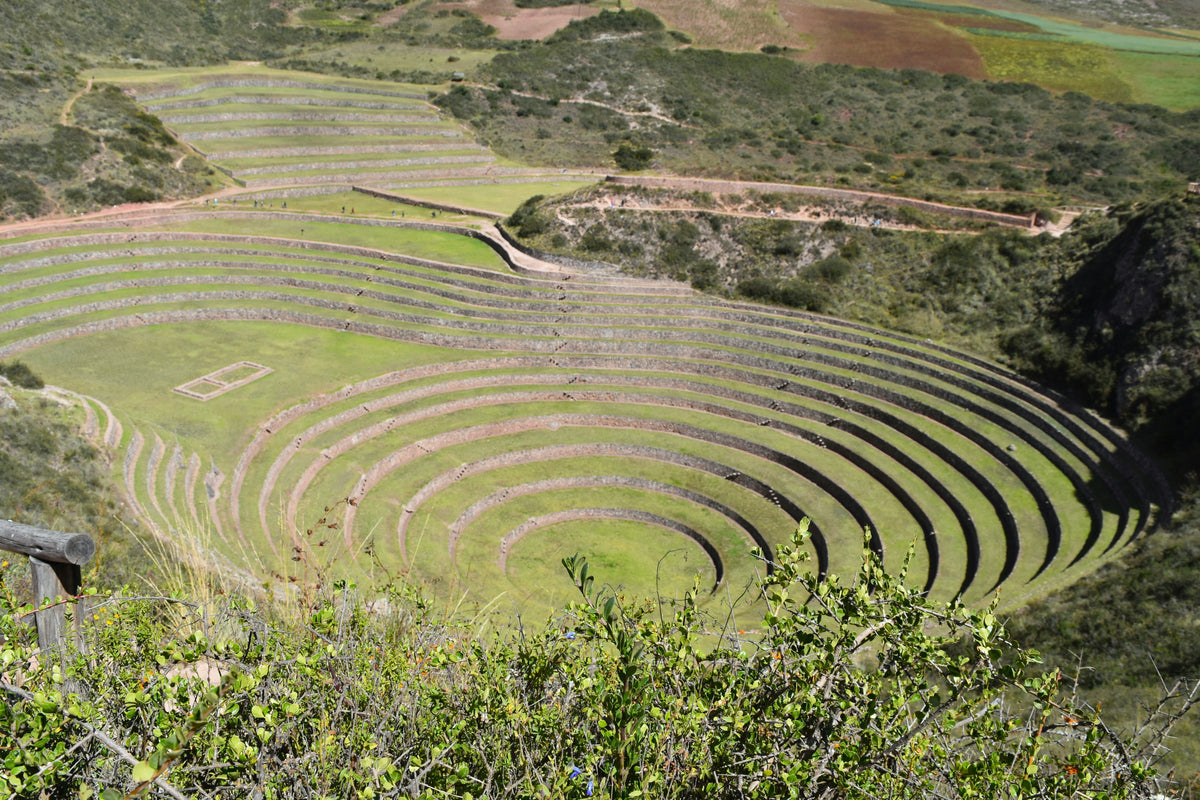
In the steep Andean landscapes, andenes (agricultural terraces) were engineered to conserve soil, capture water, and maximize sun exposure [3]. These stone-walled terraces transformed vertical mountains into productive farmlands.
More than 1 million hectares of terraces still shape the Sacred Valley and other regions around Cusco. Their ecological benefits—erosion control, temperature regulation, and moisture retention—make them a model of sustainable agriculture [3].
4. Planting by the stars – the celestial agricultural calendar
In Andean cosmology, the sky was not just a backdrop—it was a calendar. Communities read the positions of stars, the moon phases, and solar events to determine the ideal times for planting and harvesting.
The waning moon, for instance, was considered ideal for planting root vegetables like potatoes, while the waxing moon favored surface crops like corn [4]. Solar cycles also defined broader agricultural rhythms, aligning human labor with celestial movement [5].
5. Natural dyes and traditional textiles
In Cusco, color comes from nature itself and is crafted with care. Cochineal insects, indigo plants, walnut husks, and iron-rich minerals are just some of the ingredients used to dye wool. These natural dyes not only reduce chemical pollution but also reflect seasonal and symbolic meaning in local culture.
Communities in Cusco still pass down recipes for dyeing alpaca and sheep wool, a tradition that ties aesthetics to environmental consciousness [6].
6. Seed guardians – conserving agrobiodiversity
Andean farmers maintain community seed banks where native varieties of corn, potatoes, quinoa, and beans are preserved, shared, and adapted year after year. These seeds are not commodities—they are stories, inherited and entrusted across generations.
With over 3,000 potato varieties cultivated in Peru alone, this diversity is essential for food sovereignty and resilience to climate change [7]. These seed guardians protect not only food, but future possibilities.
7. Rotational Alpaca grazing – harmony on high-altitude pastures
In the highlands of Cusco and Puno, alpaca herders rotate pastures seasonally to prevent overgrazing and protect wetlands. This traditional method allows the puna grasslands to regenerate naturally [8].
8. Coca leaf ceremonies – wisdom in every offering
The coca leaf is sacred in Andean cosmology. In villages like Sonqo, it is used to communicate with the Apus (mountain spirits) and express gratitude during life’s milestones [10].
Whether in a k'intu offering—a sacred gesture involving three coca leaves arranged side by side—or a simple act of challar (sprinkling liquid as an offering), these ceremonies go beyond ritual [10]. People offer coca to the apus and Pachamama before harvesting, traveling, or beginning important events. They reflect an ethical relationship with the land—where every action is preceded by intention, dialogue, and respect. It’s a pause, a prayer, and a pact.
9. Vernacular architecture – building with earth and stone
Cusco’s rural homes are built for the land and with the land. Using adobe, thatch, and stone, vernacular architecture offers thermal efficiency and resilience to extreme temperatures [11].
Biodegradable and suited to the highland climate, these structures reflect cultural identity —homes that breathe with the seasons and age gracefully with the land. Mirroring the mountains, they stand as living extensions of the Andean environment. In today’s search for sustainable building, these techniques offer powerful lessons.
10. Ethical wild harvesting – medicinal plants and local knowledge
In the Andes, medicinal plant use is grounded in ecological wisdom and ancestral tradition. Nearly 83% of herbs used in traditional medicine are native and often wild-harvested with careful attention to lunar cycles, seasons, and spiritual balance [12].
Families still gather wild herbs like muña, llantén, and marco not just for healing, but with intention: never taking too much from one plant, always leaving enough for regeneration. Communities have passed down these harvesting ethics through oral tradition and lived practice for over 2,000 years. While the data comes from northern Peru, this practice reflects a broader Andean ethic—where even in harvest, there is humility, reverence, and responsibility.
Ancient wisdom for a modern world
Andean traditions show us that sustainability is not a destination—it’s a relationship. When we listen to the rhythms of the land, honor reciprocity, and act with humility, we begin to restore the balance that modern systems have broken.
This Earth Month, let’s look back to move forward. Reconnecting with ancestral knowledge might be the most radical—and responsible—act of environmentalism today.
Sources (12)
- Kuokkanen, R. (2011). Indigenous economies, theories of subsistence, and women: Exploring the social economy model for Indigenous governance. American Indian Quarterly, 35(2), 215-240.
- Paponnet-Cantat, C. (1996). Deathly Waters and Hungry Mountains: Agrarian Ritual and Class Formation in an Andean Town. The Canadian Review of Sociology and Anthropology, 33(2), 242+. https://link.gale.com/apps/doc/A18585438/AONE?u=anon~953440e5&sid=googleScholar&xid=fb63652a
- Denevan, W. M. (2001). Cultivated landscapes of native Amazonia and the Andes. Oxford University Press, USA.
- Biémont, É. (2024). Astronomy in the Andes. In The Incas' Sky: From Myths to History and Astronomy (pp. 159-190). Cham: Springer Nature Switzerland.
- Wanot, J. (2016). The influence of celestial bodies and astronomical phenomena on everyday life in the Inca Empire. Cosmos Astronomia Ciala Niebieskie, 23-34.
- Cardon, Dominique (2007). Natural Dyes: Sources, Tradition, Technology and Science.
- Zimmerer, K. S. (2023). Changing fortunes: Biodiversity and peasant livelihood in the Peruvian Andes (Vol. 1). Univ of California Press.
- Flores Ochoa, Jorge A. (1977). Pastores de alpacas de los Andes: estudio de la comunidad de Chaulipampa, Puno.
- Quezada, O. V. (2003). Valoración económica de los bienes y servicios ambientales de las praderas altoandinas en el Perú-políticas para el manejo sostenible. Arequipa, Perú.
- Allen, C. J. (2012). The hold life has: Coca and cultural identity in an Andean community. Smithsonian Institution.
- Betancur, H., Ramos, E., Quispe, G., Gutiérrez, Á., & Mendoza, A. (2022). Características de la arquitectura vernácula en zonas altoandinas de Perú. Una contribución al estudio del mundo rural. Cuadernos de Vivienda y Urbanismo, 15, 21-21.
- Bussmann, R. W., & Sharon, D. (2006). Traditional medicinal plant use in Northern Peru: tracking two thousand years of healing culture. Journal of ethnobiology and ethnomedicine, 2, 1-18.


