

Origin
The history of Alpaca herding in the Sacred Valley
This is more than a story about animals. It’s about roots, rituals, and relationships—brought into focus every year on Alpaca Day, celebrated every August 1st, when the bond between alpacas and Andean culture takes center stage.
More than a wool provider
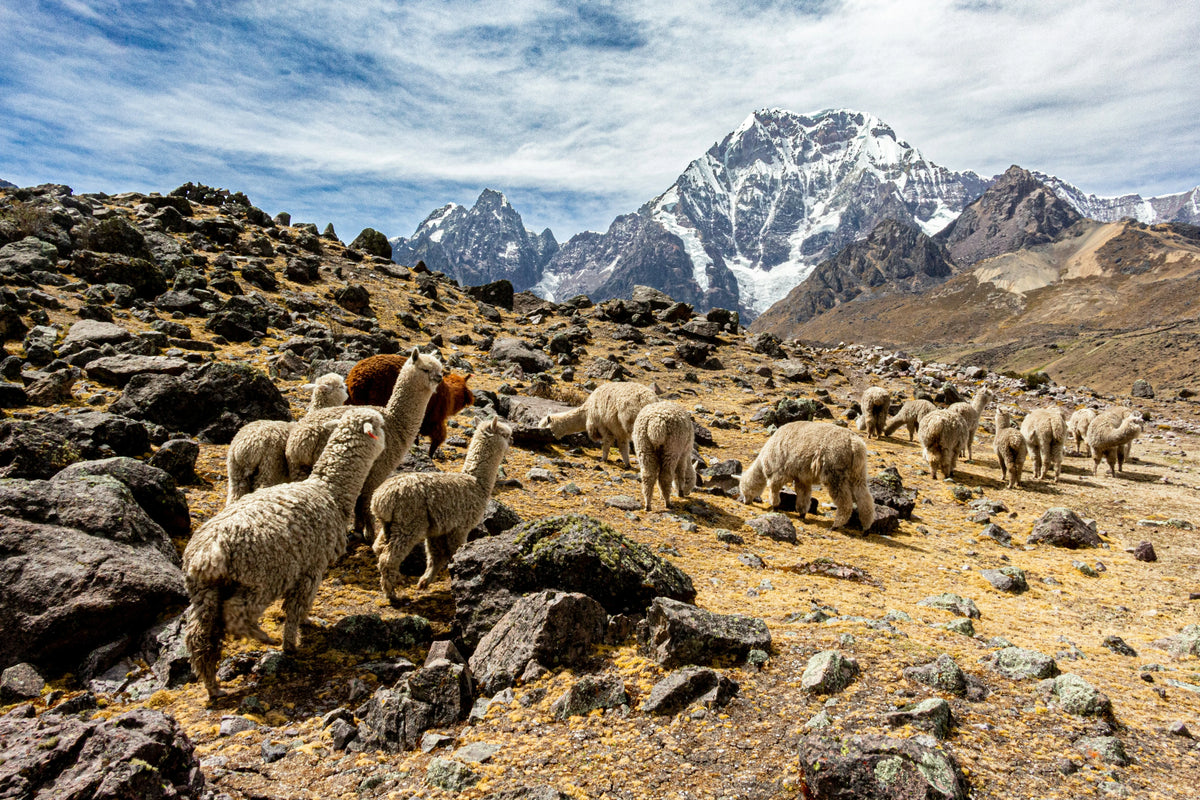
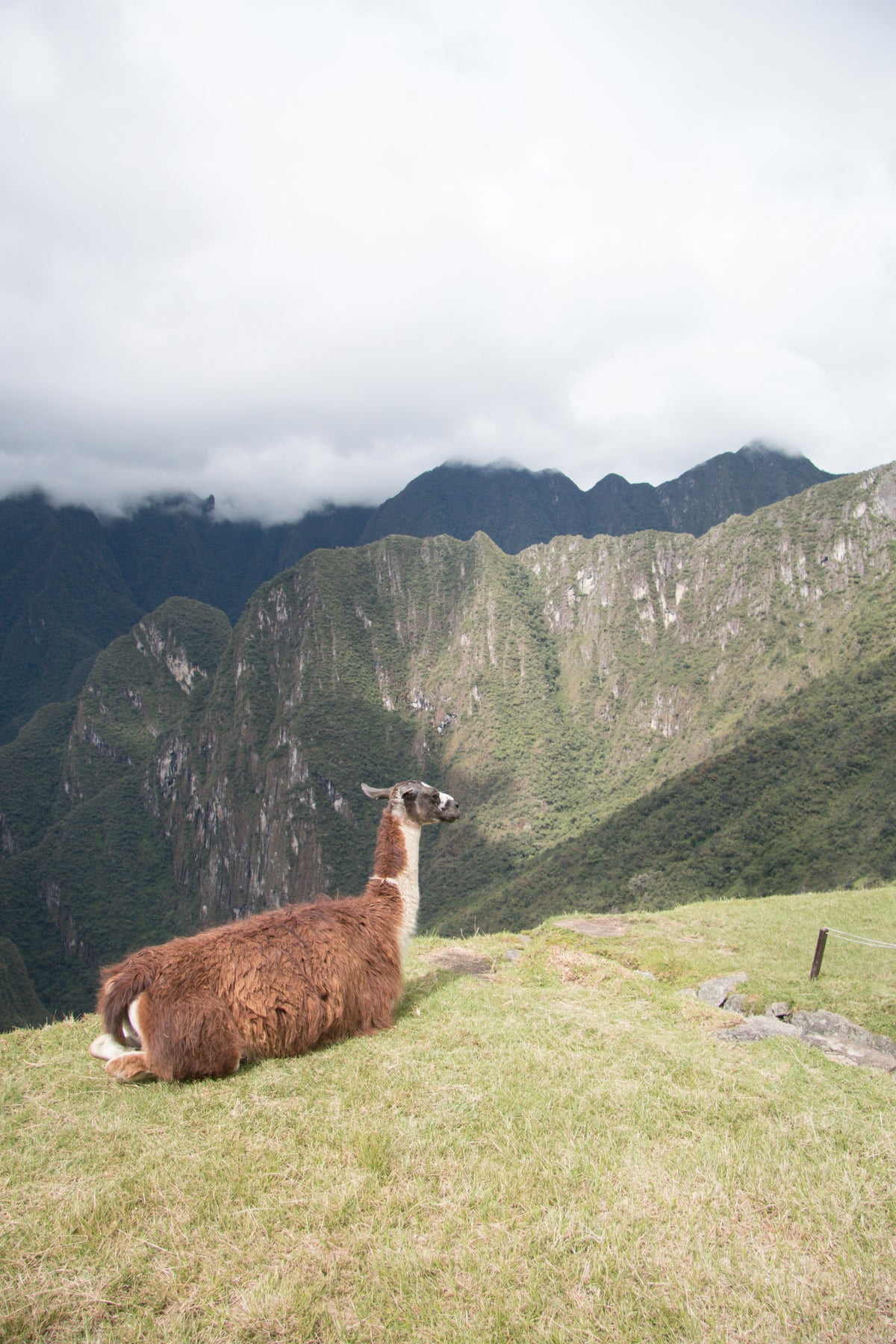
High in the Andes, nestled between snow-capped peaks and terraced hillsides, alpacas have quietly shaped the rhythm of Andean life for millennia. In Peru's Sacred Valley, these gentle camelids are more than a source of fiber—they are symbols of endurance, knowledge, and reciprocity.
To understand alpaca wool is to trace the threads of history itself: from ancient pastoralists to the present-day herders who still walk the same paths their ancestors carved into the mountains.The Sacred Valley is not only a place of breathtaking beauty, but also a living archive of one of the world’s oldest pastoral traditions.
Origins in the Andes: domestication before empire
Long before there were empires, the people of the high Andes were forging a quiet revolution—one that would transform the landscape and their way of life. Alpacas were first domesticated over 6,000 years ago in the high, wet puna of the central Andes [1,2]. Archaeozoological data suggests that the alpaca descends from the wild vicuña, while its cousin, the llama, was domesticated from the guanaco [3]. Both species were central to the development of early Andean societies, though their roles diverged: llamas for transport, alpacas for their fine fleece.
These early communities didn’t simply tame animals—they built relationships. They observed, adapted, and over time, bred creatures that could thrive in the thin, oxygen-poor air of the altiplano. Genetic studies show alpacas developed traits like hypoxia resistance and dense fleece to survive in these extreme conditions [1].
The Sacred Valley, with its wet grasslands and elevated terrain, provided an ideal environment for alpaca domestication. Its altitude and ecology still mirror the high puna landscapes that first shaped alpaca biology and behavior [2].
Inca era: sacred animals and sophisticated herding systems
By the time the Inca Empire rose to power, the bond between humans and alpacas had become something sacred. Alpacas were more than livestock—they were woven into the cosmology of the state. Their fleece, especially the white variety, was considered sacred and reserved for rituals, sacrifices, and the garments of Inca royalty.
The Incas managed enormous state herds using a sophisticated system of herders known as llamichos. These herders were highly respected and played a crucial role in the empire’s economy and ritual life. They practiced seasonal migration, pasture rotation, and had deep knowledge of grazing dynamics, animal behavior, and landscape stewardship [3].
In the Sacred Valley, alpaca herding was both a livelihood and a calling. The knowledge of when to move the herds, how to treat common ailments with native herbs, and how to balance the needs of animals with the resilience of the land was passed from one generation to the next. Every aspect of herding—feeding, shearing, birthing—had ceremonial weight.
Alpacas also appeared in textiles, pottery, and ceremonial objects, often depicted as messengers between the earthly and spiritual realms. In every sense, they were part of a living Andean cosmovision [3].
Colonial disruption and cultural persistence
Everything changed with the Spanish conquest. Colonial regimes dismantled Incan systems, replacing alpaca herds with European sheep and marginalizing Andean pastoral knowledge [1]. Spanish colonizers failed to distinguish between llamas and alpacas, leading to uncontrolled hybridization and degradation of fiber quality.
This period saw not only genetic mixing but also spiritual loss. Alpacas lost their ceremonial status and became utilitarian commodities. Despite this, communities in the Sacred Valley and beyond resisted erasure. They continued to herd alpacas, preserving language, rituals, and techniques across centuries of marginalization.
Pre-Hispanic breeds vanished, diseases spread, and landscapes changed—but the practice endured [3,4]. Today, what survives is a remarkable act of cultural resistance: Andean families continuing to raise alpacas not just as animals, but as symbols of identity.
Alpaca herding today: a living tradition in the Sacred Valley
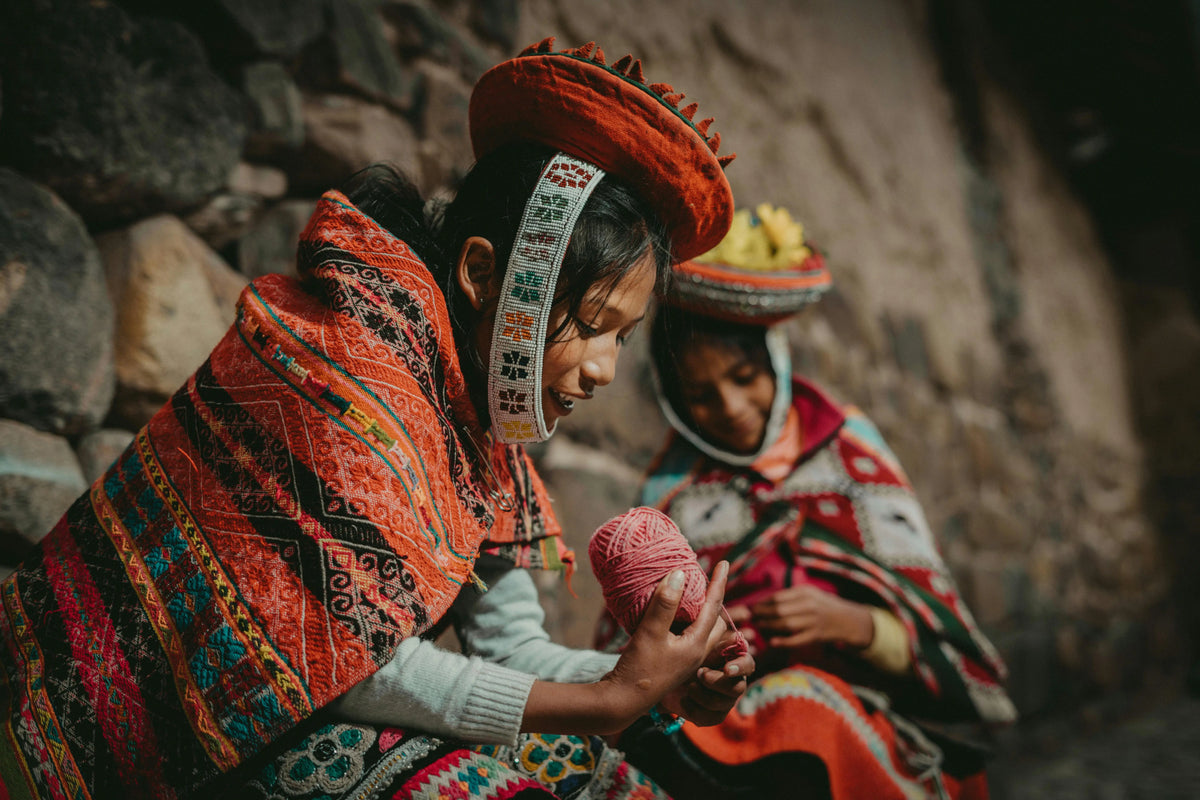
In today’s Sacred Valley, you can still feel that lineage. In the crisp morning air of Patacancha, or the quiet slopes of Misminay, the rhythm of hooves on stone paths echoes ancient footsteps. Here, women spin wool beside adobe homes, children laugh as they tend flocks, and elders speak of the seasons like they are kin.
More than 82,000 families across Peru continue to depend on alpacas for fiber, meat, and cultural identity [6]. But they face new challenges: climate change has made snowfall less predictable, extreme poverty persists, and global market trends threaten traditional breeds and practices [4].
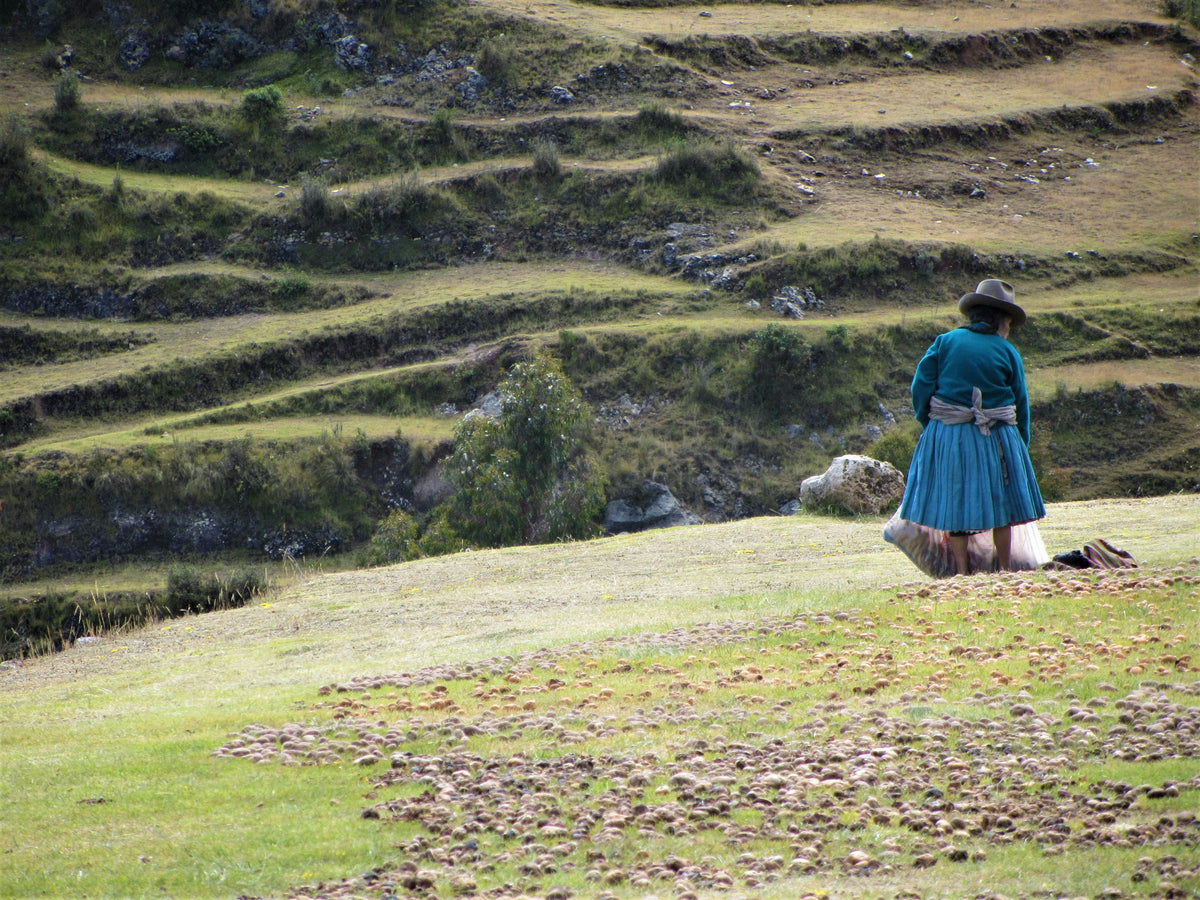
In communities like Ccarhuancho, herders adapt by preserving highland wetlands known as bofedales. These wetlands, crucial for dry-season grazing, are managed through communal irrigation, rotational grazing, and decision-making guided by ayni and minga—reciprocity and collective labor [5]. These methods sustain fragile ecosystems while allowing herding to adapt to climate change.
Yet sustainability isn’t only about ecology. The international preference for white alpaca fleece has pressured herders to breed for a single trait, reducing genetic diversity and threatening rare varieties like the Suri [4]. And as elders age, fewer young people remain in the highlands to inherit their wisdom.
But there is hope. Organizations like Threads of Peru and Awamaki partner with local women to revitalize traditional weaving, offering fair wages and recognition. At the same time, programs to integrate ancestral knowledge into sustainable breeding are gaining ground.
As Benning (2018) observed in Ollantaytambo, some locals still trade goods through ayni—potatoes for wool, help for help. These aren’t just quaint customs. They are reminders that the Sacred Valley has its own way of measuring value—through relationship, reciprocity, and resilience. [7]
Why it matters: a global connection through wool
When you wrap yourself in alpaca wool, you’re not just feeling warmth. You’re feeling history. You’re wrapped in the legacy of highland herders, in the breath of vicuñas from the puna grasslands, in the gentle knowledge of people who have always known how to live with the land.
You’re also choosing something radical: to resist fast fashion. To slow down. To ask where your clothing comes from, who made it, and what it costs to the Earth and its people.
True sustainability is more than a buzzword. It’s the preservation of language, land, and labor. It’s intergenerational memory stitched into every thread.
In a time when globalization threatens to flatten culture, the Sacred Valley rises like a woven tapestry—full of color, texture, and memory. And the herders who guide their flocks across this ancient landscape? They are not echoes of the past. They are guardians of the future.
Wear alpaca with intention. Because in every fiber, there is a story waiting to be honored.


