


Impact
Sustainable fashion for World Environment Day
Each year, June 5th invites us to pause and reflect on the state of our natural world. World Environment Day is not just a date on the calendar— it’s a global moment of awareness, of recalibration, and of responsibility. While many industries contribute to the environmental challenges we face, fashion industries have an immense potential to regenerate ecosystems, protect biodiversity, and foster cultural resilience. But only if we choose to do things differently.
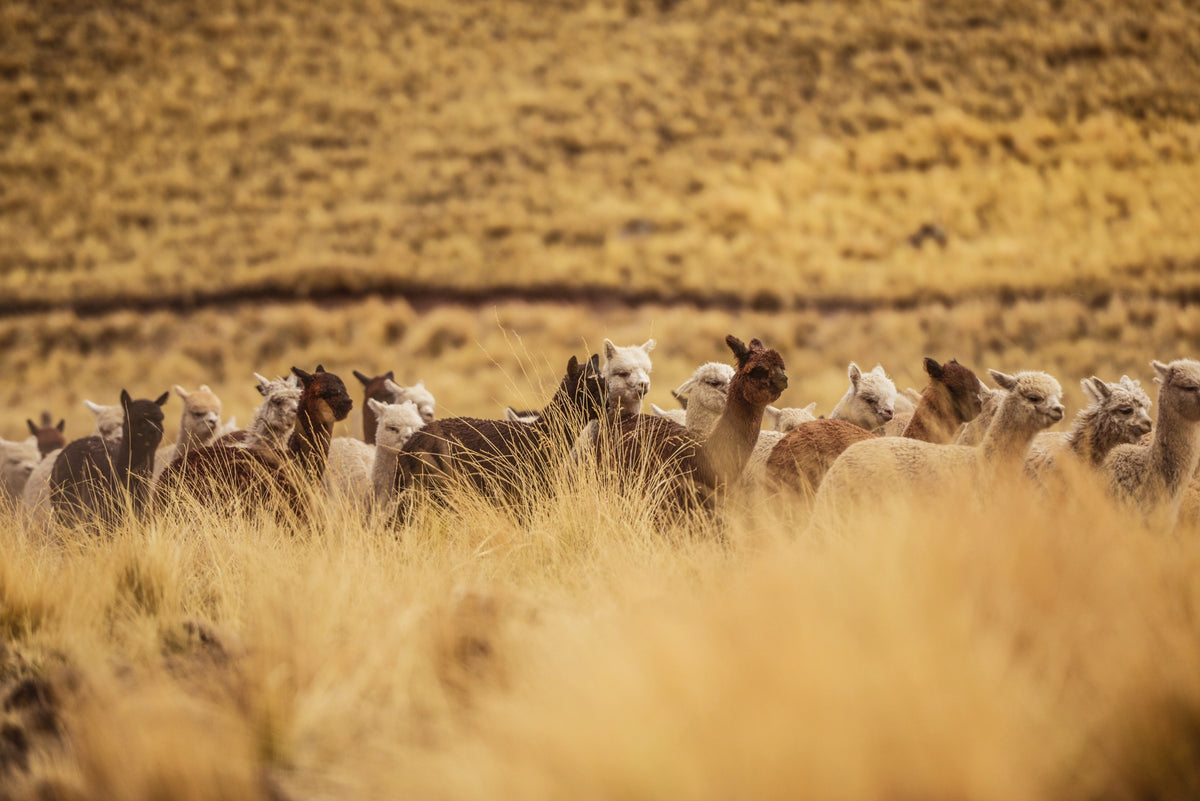
Sustainable animal fibers and regenerative grazing
One of the most powerful shifts in recent years is the movement toward sustainable animal fiber systems, especially in regions with long-standing relationships to pastoralism. Unlike industrial livestock operations that rely on monoculture feed and produce high methane emissions, regenerative grazing models —particularly those involving animals adapted to local ecosystems, like alpacas or sheep— are proving that fiber production can be part of ecological restoration [1].
In the Andean highlands, for example, alpacas have been part of the landscape for thousands of years. Their padded feet are gentle on fragile mountain soils, avoiding compaction, while their selective grazing behavior encourages native grassland regeneration [1]. Recent studies show that alpaca grazing can actually improve soil structure, increase organic matter, and support the return of native plant species in degraded highland areas [1]. Their waste further contributes to nutrient cycling, enriching the soil naturally.
These regenerative models contrast sharply with conventional agriculture, which has led to the loss of an estimated 30–75% of organic carbon in soils globally [2]. But with well-managed grazing, ruminants like alpacas can become part of the solution. Rather than accelerating degradation, they can improve soil health, sequester carbon, and reduce erosion —benefits that, when carefully balanced, can even help offset their methane emissions [2,3].
Animal welfare in fiber production
Beyond the environmental role of sustainable herding, the treatment of animals themselves has come under greater scrutiny. The Five Freedoms of Animal Welfare, established by the World Organisation for Animal Health (WOAH, formerly OIE), have become foundational principles in responsible animal husbandry. These include [4]:
- Freedom from hunger, thirst, and malnutrition.
- Freedom from physical and thermal discomfort.
- Freedom from pain, injury, and disease.
- Freedom from fear and distress.
- Freedom to express natural behaviors.
In ethical fiber production, especially in the luxury segment, these freedoms are increasingly seen not as aspirational—but as non-negotiable [4]. Certifications and direct sourcing models help ensure that animals like alpacas and sheep are raised not merely as production units, but as sentient beings, with dignity and care deeply embedded in the systems that depend on them.
When it comes to the fiber itself, alpaca wool is an extraordinary example of form meeting function. It's lightweight, water-resistant [5], and doesn’t contain lanolin, which makes it hypoallergenic and ideal for sensitive skin [6,7]. Alpaca fiber also has a longer lifespan compared to many other wools, which directly combats the throwaway culture of fast fashion. A garment that lasts decades is a garment that doesn’t end up in landfill.
Dyes: natural, certified, and safe
But the sustainability of a garment doesn’t end with the fiber. The dyeing process is one of the most chemically intense stages in textile production —often hidden from view, but with serious consequences for both people and ecosystems. Today, more than 3,600 synthetic dyes are in use across the global fashion industry, involving over 8,000 different chemicals in processes such as dyeing, fixing, and printing [8]. Many of these substances are derived from petroleum, and nearly 40% of dyes contain chlorinated compounds, some of which have been linked to carcinogenic effects and persistent environmental toxicity [8,9].
These chemicals don’t just disappear —they often flow into rivers and soil systems in regions where environmental regulations are weak or poorly enforced [8]. The result is long-term damage to aquatic ecosystems, human health, and local farming communities [9].
However, not all dyes are created equal. Plant-based and insect-derived dyes —like indigo or cochineal —offer naturally vibrant tones with a fraction of the ecological cost [10]. When properly managed and certified, these natural dyes can be both safe and effective. Standards like GOTS (Global Organic Textile Standard) ensure that even natural additives and mordants are free from harmful toxins, and that wastewater is treated before returning to the environment [11].
Details matter: every component counts
A garment’s components matter just as much as the fabric itself. That includes zippers, buttons, elastics, threads, and labels —all of which contribute to its final environmental footprint. While often treated as secondary details, these non-textile elements can represent a significant portion of a garment’s total impact, particularly when made from synthetic materials or complex blends that resist breakdown or recycling [12,13].
Studies show that integrating natural or recyclable materials across all garment components not only reduces the environmental footprint, but also simplifies post-consumer management, whether through composting, repair, or material recovery [13]. For a piece to be truly biodegradable or compostable, every element—down to the smallest stitch—must be free of synthetic coatings and chosen with circularity in mind.
Traceability and transparency in fashion
This brings us to one of the most important—and often neglected—aspects of sustainable fashion: traceability. It’s not just about labeling where something is made, but understanding who made it, how it was made, and under what conditions. This level of accountability does more than just build consumer trust—it becomes a tool for change. Traceability empowers people to make informed choices, and it puts pressure on brands and suppliers to improve environmental practices and uphold fair labor conditions [14].
Moreover, traceability is key to social and environmental justice in the textile industry. Without clear data on production processes or waste streams, it becomes nearly impossible to implement truly circular systems or to ensure that those who make our clothes are protected and respected [15].
The power of local production
In the same vein, localized production is emerging as one of the most impactful ways to reduce environmental harm. When fiber sourcing, dyeing, cutting, and sewing all take place within a single country or region, carbon emissions from transport are significantly reduced [15]. But the benefits go far beyond logistics.
Producing locally allows for greater oversight and ethical accountability, while also supporting domestic industries that often preserve cultural and artisanal knowledge. In countries like Peru, this means helping to sustain ancestral techniques in weaving, dyeing, and fiber harvesting —skills passed down through generations that are at risk of disappearing in globalized fast-fashion models [16].
When integrated thoughtfully, localized sustainable fashion can strengthen circular economies, keeping value, labor, and materials within the community. While successful examples already exist—particularly in highland and rural communities—scaling these models nationally requires navigating logistical, economic, and cultural challenges [15]. Infrastructure gaps, lack of investment, and undervaluation of indigenous knowledge continue to pose barriers.
Indigenous knowledge as sustainability blueprint
The weaving techniques of the Andes, the natural dyeing practices of Amazonian peoples, the animal-tending customs passed through generations— these are not just traditions; they are blueprints for sustainable living.
Far from being outdated, these practices represent models of ecological intelligence, shaped by centuries of coexistence with the environment [17]. They often emerged not from scarcity, but from deep observation and harmony with nature—a knowledge system rooted in reciprocity, respect, and balance [18].
Today, integrating this indigenous wisdom into contemporary fashion offers more than just aesthetic or symbolic value. It provides practical, low-impact solutions to environmental challenges, while also strengthening cultural identity and empowering the communities that hold these traditions [18].
These ancestral approaches prove that sustainability is not a trend—it’s a way of life, and one that has long existed outside of the industrial paradigm.
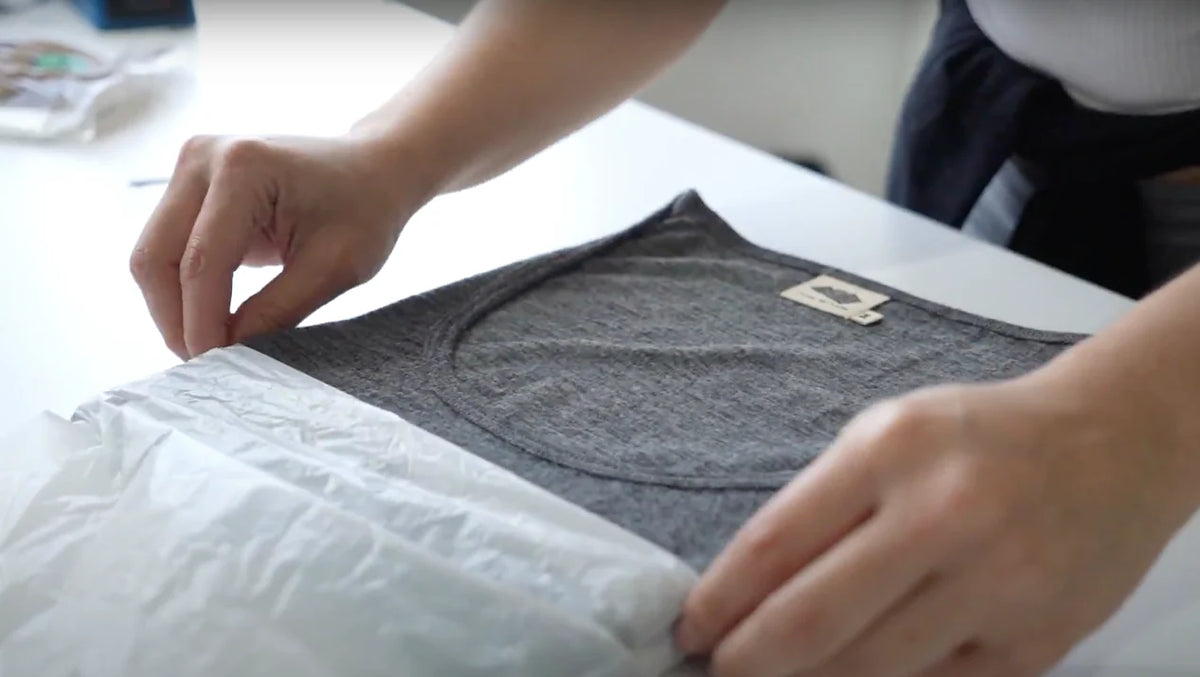
An integrated future is already here
The environmental movement cannot be divorced from the cultural one. As we strive to heal the planet, we must also uplift the wisdom of those who have lived sustainably for centuries.
At Arms of Andes, sustainability isn’t a single action—it’s a holistic practice. From working directly with herding communities in the Andes, to using biodegradable fibers and natural dyes, to ensuring that every detail—from thread to tag—is chosen with care, our approach is rooted in intention. We trace every step. We produce in one country. And we honor ancestral knowledge at every stage.
This World Environment Day, we’re not just celebrating nature—we’re inviting our community to understand the systems behind what we wear. To see how true sustainability means rethinking the entire journey of a garment, and to recognize that the future of fashion must be slow, ethical, and deeply connected to place and people.
This World Environment Day, we ask you: What story is your clothing telling?
Sources (18)
- Liu K, Liu Z, Li X, Shi XR, Lock TR, Kallenbach RL, Yuan ZY. Precipitation-mediated responses of plant biomass production and allocation to changing soil pH in semiarid grasslands. Agric Ecosyst Environ. 2022 Nov 1;339:108123. doi:10.1016/j.agee.2022.108123.
- Teague WR, Apfelbaum S, Lal R, Kreuter UP, Rowntree J, Davies CA, Byck P. The role of ruminants in reducing agriculture’s carbon footprint in North America. J Soil Water Conserv. 2016;71(2):156–64. doi:10.2489/jswc.71.2.156.
- Costa RG, Treviño IH, de Medeiros GR, Medeiros AN, Pinto TF, de Oliveira RL. Effects of replacing corn with cactus pear (Opuntia ficus-indica Mill) on the performance of Santa Inês lambs. Small Rumin Res. 2012 Jan;102(1):13–7. doi:10.1016/j.smallrumres.2011.09.012.
- World Organisation for Animal Health (WOAH). Animal welfare [Internet]. Paris: WOAH; c2025 [cited 2025 Jun 5]. Available from: https://www.woah.org/en/what-we-do/animal-health-and-welfare/animal-welfare/
- McGregor BA. An introduction to evaluating alpaca fleece attributes and interpreting alpaca fibre tests. Alpacas Aust. 2003;40:11–6.
- National Center for Biotechnology Information (NCBI). PubChem Compound Summary for: Lanolin [Internet]. Bethesda (MD): National Library of Medicine (US); 2025 [cited 2025 Jun 5]. Available from: https://pubchem.ncbi.nlm.nih.gov/compound/Lanolin
- Allain D, Renieri C. Genetics of fibre production and fleece characteristics in small ruminants, Angora rabbit and South American camelids. Animal. 2010 Sep;4(9):1472–81. doi:10.1017/S1751731110000029.
- Kant R. Textile dyeing industry an environmental hazard. Nat Sci. 2012;4:22–6. doi:10.4236/ns.2012.41004.
- Ardila-Leal LD, Poutou-Piñales RA, Pedroza-Rodríguez AM, Quevedo-Hidalgo BE. A brief history of colour, the environmental impact of synthetic dyes and removal by using laccases. Molecules. 2021 Jun 22;26(13):3813. doi:10.3390/molecules26133813. Pmid:34206669; pmcid:PMC8270347.
- Bechtold, T., & Mussak, R. (2009). Handbook of Natural Colorants. Wiley.
- Global Standard GmbH. The Standard [Internet]. Berlin: Global Standard GmbH; c2025 [cited 2025 Jun 5]. Available from: https://global-standard.org/the-standard
- Fuente: Fletcher, K., & Tham, M. (2019). Fashion and Sustainability: Design for Change. Laurence King Publishing.
- Williams GJL, Heidrich O, Sallis PJ. A case study of the open-loop recycling of mixed plastic waste for use in a sports-field drainage system. Resour Conserv Recycl. 2011 Jan;55(2):118–28. doi:10.1016/j.resconrec.2010.08.002.
- Turker D, Altuntas C. Sustainable supply chain management in the fast fashion industry: An analysis of corporate reports. Eur Manag J. 2014 Oct;32(5):837–49. doi:10.1016/j.emj.2014.02.001.
- Niinimäki K, editor. Sustainable fashion in a circular economy. Espoo: Aalto ARTS Books; 2018. Available from: http://urn.fi/Urn:isbn:978-952-60-0090-9
- Reyna J. Alpaca breeding in Peru and perspectives for the future. Alpacas Australia. 2005.
- Centro de Textiles Tradicionales del Cusco. Our communities [Internet]. Cusco: Centro de Textiles Tradicionales del Cusco; c2025 [cited 2025 Jun 5]. Available from: https://www.textilescusco.org/our-communities
- Volckhausen T. Indigenous-made film explores traditional textile making in the Ecuadorian Amazon. Mongabay [Internet]. 2019 Feb 28 [cited 2025 Jun 5]. Available from: https://news.mongabay.com/2019/02/indigenous-made-film-traditional-textile-production-in-ecuadorian-amazon/


