


Impact
Is wool sustainable? Rethinking livestock-based textiles for a greener future
Wool is often praised as a natural, biodegradable, and renewable material, making it an appealing option in the growing demand for sustainable fashion. Yet, despite its eco-friendly image, the production and processing of wool—and other livestock-based textiles such as alpaca, cashmere, and vicuña—come with significant environmental and ethical challenges. In this month that celebrates World Water Day, this is the perfect moment to critically examine the true sustainability of wool, focusing on waste, water use, energy consumption, and the global structure of the animal fiber market.
Wool waste and environmental impact: what lies beneath the surface
While wool is biodegradable, its lifecycle frequently ends in environmentally harmful ways. Up to 100 million tons of textile waste are generated globally each year, with China alone contributing 40 million tons [1]. Of this total, wool makes up a substantial but poorly managed fraction. Theoretically, 95% of textile waste is recyclable, yet recycling rates remain extremely low: less than 10% in China and just around 20% in Europe and the U.S [1].
Much of the discarded wool is landfilled or incinerated. Landfilling wool, especially untreated wool, poses risks of soil contamination and bacterial hazards (e.g., anthrax spores), while incineration releases sulfur-rich greenhouse gases [1]. These realities complicate wool’s image as a green material.
Encouragingly, wool waste has potential as a valuable secondary resource. It can be repurposed into thermal and acoustic insulation, composite boards, or even used in water filtration systems to remove dyes and heavy metals. Chemically, wool waste can be transformed into keratin-based films and fertilizers, and even advanced biomaterials for wearable electronics [1]. However, most of these applications are still at the experimental or pilot stage, with limited infrastructure for large-scale deployment.
The global market for animal-based textiles: a sustainable future or a structural problem?
Despite rising awareness of sustainability, wool continues to be processed within a largely unsustainable industrial system. Even bio-based, circular materials like wool can contribute to ecological overshoot if overproduced and overconsumed. True sustainability requires changes to the entire economic system, not just materials [2].
In many regions, wool is treated as a by-product of meat production, leading to its undervaluation and mass disposal. Others, like Merino wool, are considered luxury commodities and enter global markets shaped by inequality and extractivism. Even regenerative practices such as transhumance or alpaca herding are at risk of being overshadowed by industrial-scale wool supply chains, which rely heavily on fossil fuels and labor exploitation.
This contradiction reflects a wider issue: the fashion industry's dependence on livestock-based fibers is deeply embedded in systems that prioritize volume over value, and appearance over longevity. However, it’s important to acknowledge that not all brands operate this way. A growing number of companies are challenging this paradigm—investing in transparency, regenerative practices, and slow fashion models that prioritize long-term sustainability over short-term profit.
Water consumption in wool production: a critical issue for world water day
Wool production is highly water-intensive, especially during the scouring and dyeing stages. Wool is washed with large quantities of heated water to remove grease and dirt, producing wastewater loaded with organic matter and chemicals [3]. Without proper treatment, this wastewater contributes to eutrophication and water pollution.
A study in 2022 conducted a water footprint assessment of six wool textile companies in China. Their results were alarming: up to 120 m³ of water is used to dye just one ton of wool. The most significant pollutants found in the wastewater included total nitrogen, ammonia, COD, and phosphates [4].
They introduced two key indicators:
- Water Scarcity Footprint (WSF): how much pressure a product places on local water availability.
- Water Eutrophication Footprint (WFeu): the potential for a product to cause water pollution.
Only one of the six companies studied reached "platinum" status in both low water use and low pollution, showing how widely performance varies across the wool industry. These findings reinforce the need for transparency, regulation, and better water treatment technology in the animal fiber supply chain.
Energy use and the myth of low impact fibers
Post-farm processing accounts for 75–85% of the total energy used in producing a Merino wool garment. Scouring, spinning, weaving, and finishing are all energy-intensive steps that depend on fossil fuels and electricity, much of which is not renewable [5].
Producing 1 kg of finished wool clothing consumes around 230–330 MJ of energy, compared to about 40 MJ/kg for raw fleece. This massive jump challenges the assumption that wool is inherently low-impact [5]. Most of the environmental load comes from energy consumed after shearing, meaning brands and consumers often underestimate the impact of what happens "downstream" [5].
Green growth and technological solutions cannot offset environmental degradation if consumption patterns remain unchanged [2].
Environmental impacts of wool production
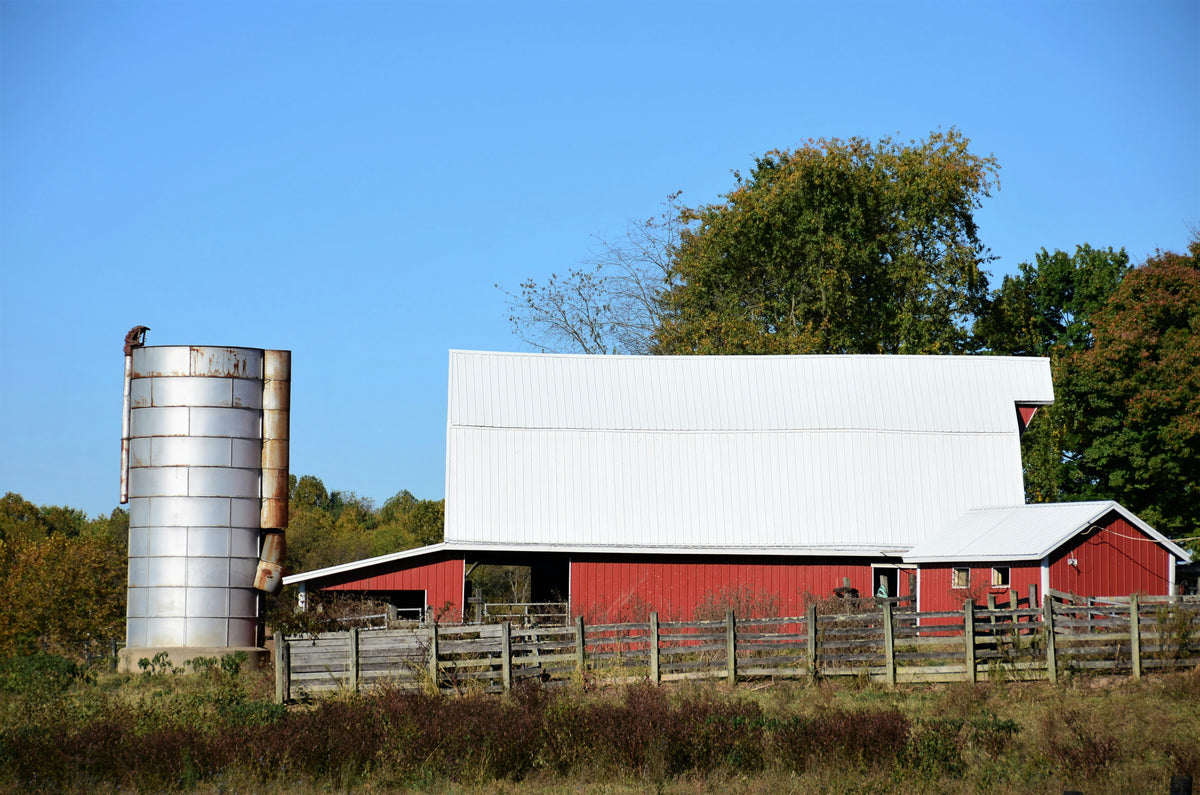
Wool may be natural, but its production brings with it a set of hidden ecological costs. First, the process of scouring raw wool —washing it to remove grease and impurities— requires large quantities of heated water. This generates wastewater rich in organic matter, detergents, and pollutants, which can harm aquatic ecosystems if not properly treated [3].
Another issue lies in the use of pesticides. To prevent parasites and insects, sheep are routinely sprayed or dipped in chemical treatments. These substances, if mismanaged, can leach into surrounding soils and waterways, posing risks to both the environment and human health [3].
Then there’s the climate cost. Sheep, like other ruminants, emit methane—a greenhouse gas many times more potent than carbon dioxide. As a result, wool carries a higher greenhouse gas footprint per kilogram than many plant-based or synthetic fibers [3].
Taken together, these impacts challenge the assumption that wool is automatically sustainable. While it's biodegradable and renewable, the environmental footprint of wool becomes far more complex—and concerning—when examined through the lens of industrial-scale production. Still, there are signs of hope: innovative approaches like methane capture for biogas are emerging, offering potential to reduce emissions. A recent study highlights how livestock manure can be broken down in special systems to produce biogas —renewable energy that could meet up to 5% of China’s energy needs [6]. It’s a promising clean energy pathway that turns animal waste into something useful. In smaller, regenerative systems —such as Andean alpaca herding— livestock can be part of ecological cycles that enrich rather than deplete the land [7].
Rethinking sustainability: durability, care, and cultural regeneration
The sustainability of wool depends not only on the material, but on how it is produced, processed, used, and discarded. Garments made with care and worn for longer periods can dramatically reduce their environmental footprint. Extending the life of a garment from 109 wears to 400 can reduce its impact by up to 68% [2].
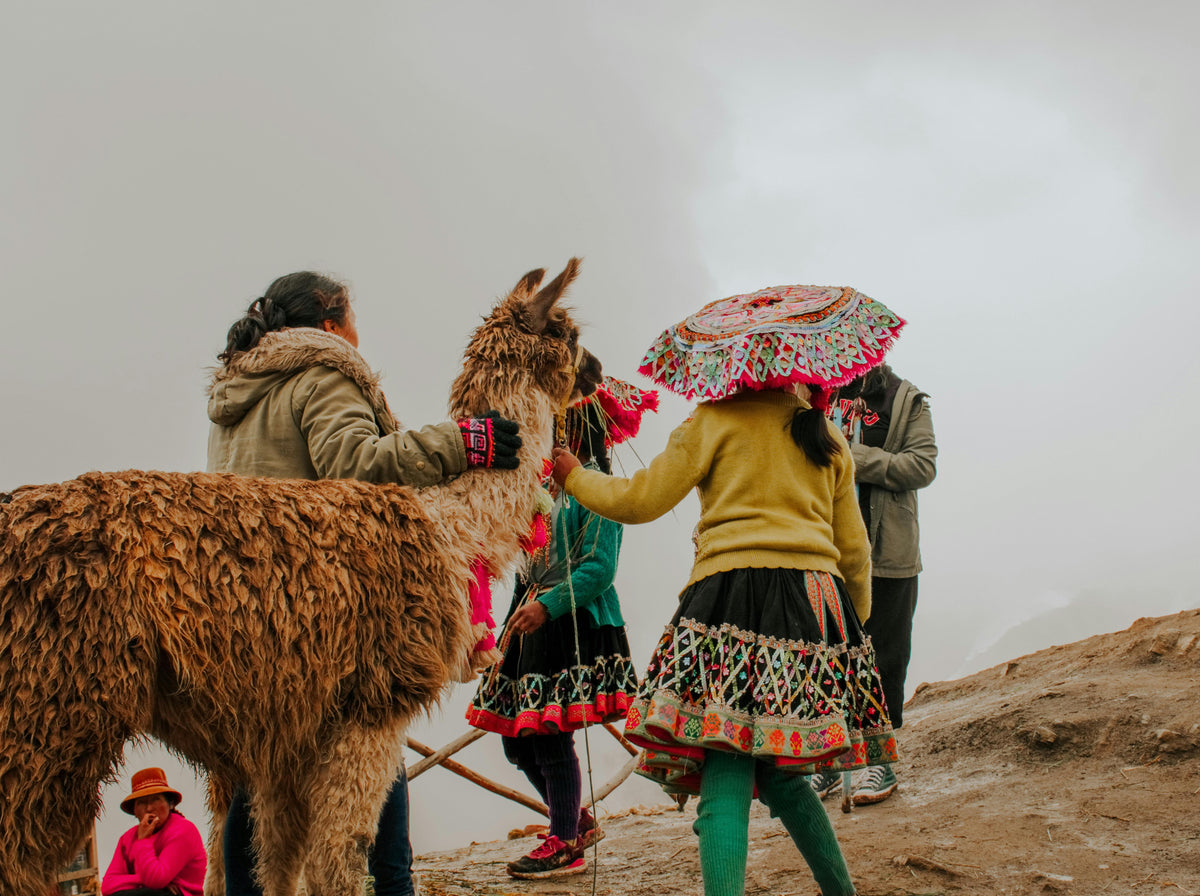
In addition, wool systems rooted in local knowledge, such as Andean alpaca herding, offer a regenerative alternative to industrial livestock models. These practices are aligned with seasonal cycles, biodiversity protection, and small-scale economies—but remain under-supported and vulnerable to market pressures.
Sustainability is a system, not a buzzword
While wool and other animal-based textiles can offer sustainability advantages such as biodegradability, insulation, and durability, they are far from inherently eco-friendly. When scaled within fast-fashion dynamics, these fibers carry significant environmental costs—particularly in water consumption, energy use, and waste generation.
For wool to be truly sustainable, we must:
- Improve transparency and certification around water and energy usage.
- Support regenerative animal fiber systems like alpaca herding.
- Push for garment longevity, reuse, and responsible care.
- Move from extractive industrial models toward living economies rooted in place and community.
Sustainability is not just about what we wear, it’s about how we live, what we value, and what we choose to protect.
Sources (7)
- Sun, Y., Li, B., Zhang, Y., Dou, H., Fan, W., & Wang, S. (2023). The progress and prospect for sustainable development of waste wool resources. Textile Research Journal, 93(1-2), 468-485.
- Smith, T., Ehrnström-Fuentes, M., Hagolani-Albov, S. E., Klepp, I. G., & Tobiasson, T. S. (2022). Rethinking the (wool) economy. In Local, slow and sustainable fashion: Wool as a fabric for change (pp. 133-170). Cham: Springer International Publishing.
- Russell, I. M. (2009). Sustainable wool production and processing. Sustainable textiles, 63-87.v.
- Li, X., Zhu, L., Dong, Y., Chen, B., Li, Q., Wang, X.,... & Wang, L. (2022). Water footprint assessment of wool products with a low-water footprint baseline. Sustainable Production and Consumption, 34, 310-317.
- Barber, A., & Pellow, G. (2006, November). LCA: New Zealand merino wool total energy use. In 5th Australian Life Cycle Assessment Society (ALCAS) conference, Melbourne (pp. 22-24).
- Wang, Y., Zhang, Y., Li, J., Lin, J. G., Zhang, N., & Cao, W. (2021). Biogas energy generated from livestock manure in China: Current situation and future trends. Journal of Environmental Management, 297, 113324.
- Teague, W. R., Apfelbaum, S., Lal, R., Kreuter, U. P., Rowntree, J., Davies, C. A.,... & Byck, P. (2016). The role of ruminants in reducing agriculture's carbon footprint in North America. Journal of Soil and Water Conservation, 71(2), 156-164.


