


Fiber
Alpaca wool GSM guide
GSM, grams per square meter, tells you how dense a fabric is. We make four alpaca wool weights. This guide shows what each one is for, what it is not for, and how to combine them.

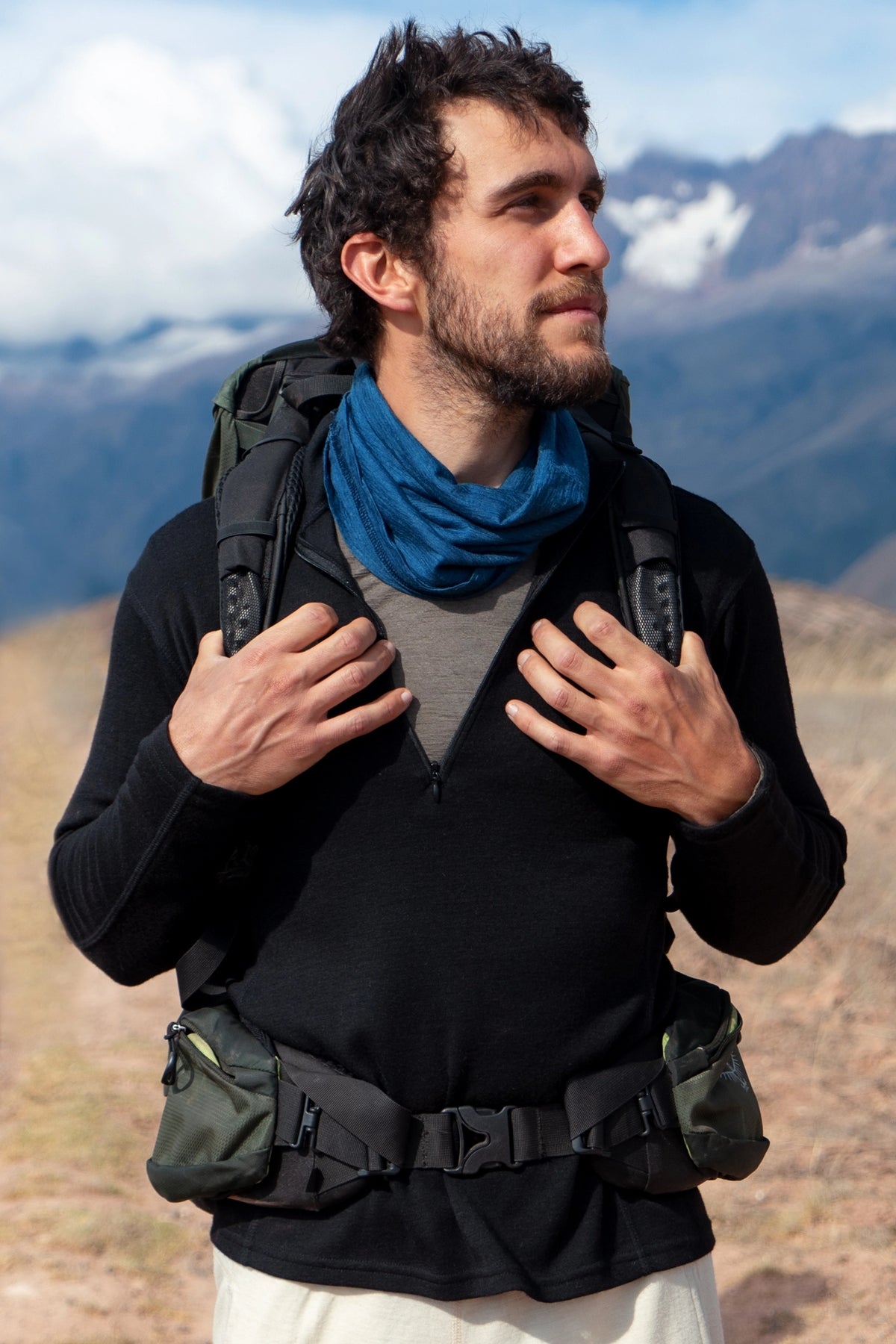
110 Featherweight: breezy and built for movement
The lightest weight we make. For sun, sweat and simple packing: it breathes, dries fast and resists odor [1–4].
Best for
- Day hikes in the sun
- Travel in hot climates
- Everyday wear in spring and summer
Not for
- Heavy packs or friction (climbing, scrambling)
- Cold or windy days that need insulation
160 Ultralight: the travel essential
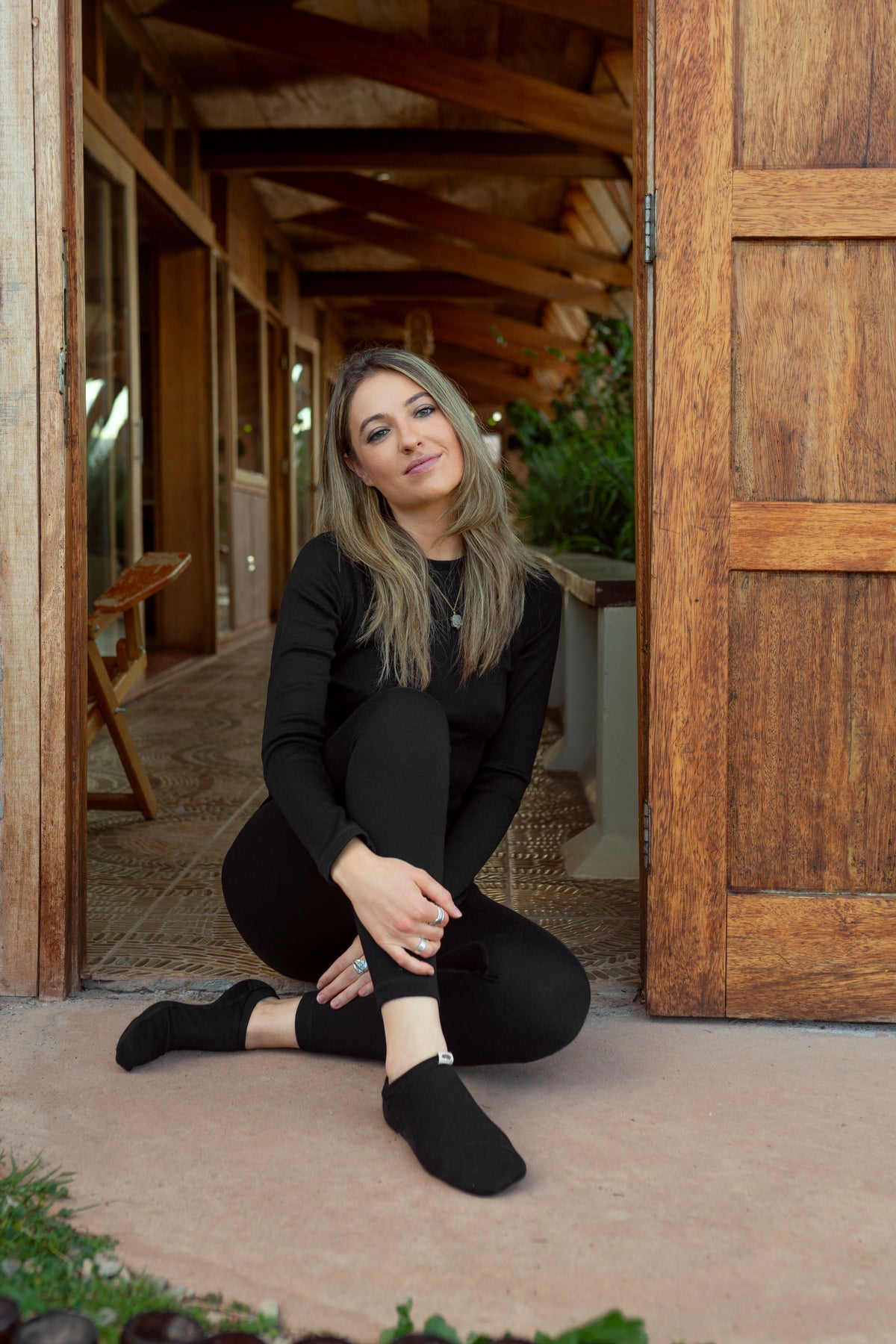
A touch more density than 110, still light and quick to dry. It folds small and stays fresh across multi-day trips [2–4].
Best for
- Active travel and multi-day trips
- Base layer on low-friction hikes
- Everyday T-shirts
Not for
- Insulation on its own below freezing
300 Lightweight: the do-it-all midlayer
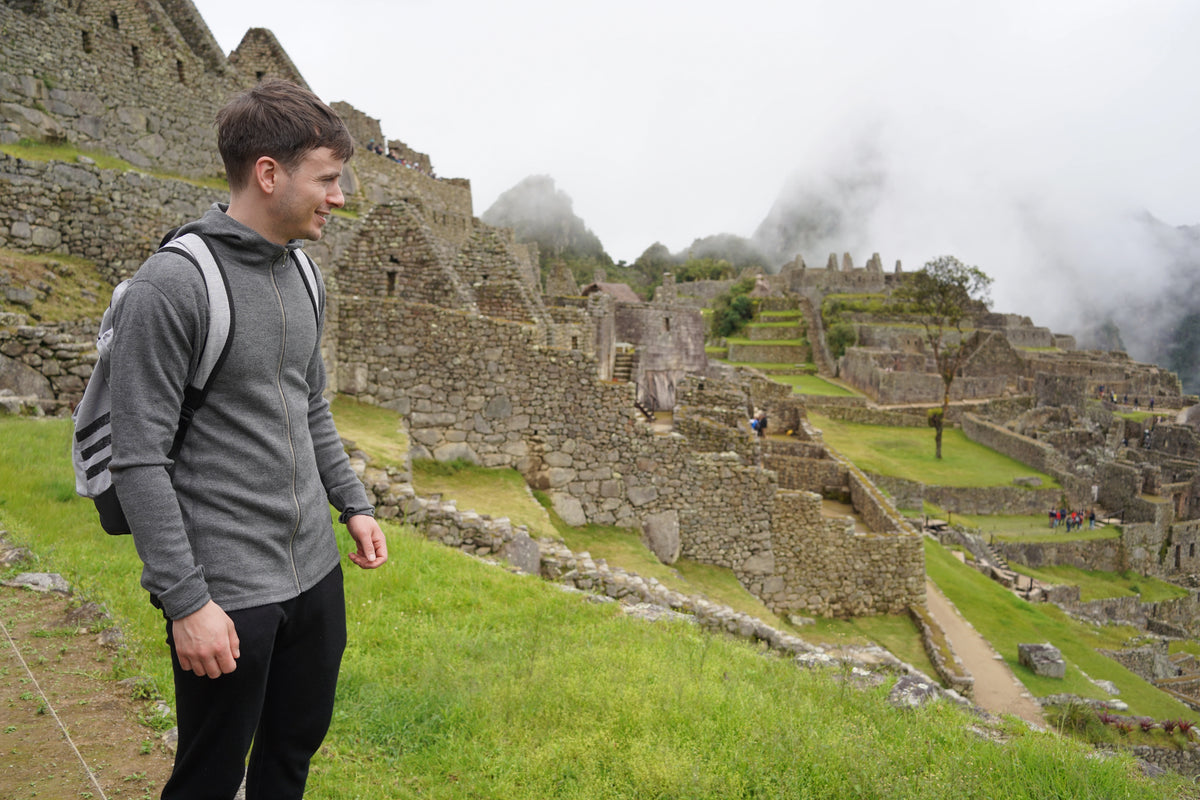
The bridge between light layers and full insulation. Warmth without bulk, and it breathes when the climb gets steep [5, 6].
Best for
- Cool treks and alpine mornings
- Shoulder seasons
- Layering under a shell
Not for
- Hot, humid days
420 Midweight: protection for harsh conditions
Our warmest weight, for cold, snow and wind. Wind resistant, warm and still breathable [7].
Best for
- Snow and high altitude
- Cold-weather camping
- Mid layer for skiing
Not for
- Warm days or high-output efforts
Which weight for which activity
Combine one base layer and one mid layer. Read the table by activity.
| Activity | Recommended weight |
|---|---|
| Ultralight summer travel | 110 or 160 |
| Everyday T-shirt | 110 or 160 |
| Long hike in cold weather | 160 + 300 |
| Climbing or abrasion-heavy activity | 300 |
| Snowy day hike | 110 or 160 + 420 |
| Cold-weather camping | 160 + 420 |
| Skiing or snowboarding, mid layer | 300 or 420 |
Questions
What does GSM mean?
Grams per square meter. It measures how dense a fabric is: the higher the number, the thicker and warmer the layer.
Which weight should I start with?
160 Ultralight. It works as a base layer on most hikes and as an everyday T-shirt, and you can add 300 or 420 on top when it gets cold.
Can I wear alpaca wool in summer?
Yes. 110 Featherweight and 160 Ultralight breathe and move sweat away from the skin, so they stay comfortable in heat.
Do I still need a rain shell?
For heavy rain, snow or icy wind, yes. Alpaca wool is a base and mid layer; wear a weatherproof shell on top.
How we know this
We make every weight from 100% Royal Alpaca wool of 18 to 18.5 microns. Each performance claim in this guide is numbered and points to one of the 14 sources below.
Lesia Tello. Biologist with a master's degree in education. She writes about how we interact with the natural world.
Jordy Munarriz. Environmental engineer with a master's degree in renewable energy. He writes about responsible travel.
Sources (14)
- Li, Holcombe and Apcar (1992). Moisture buffering behavior of hygroscopic fabric during wear. Textile Research Journal.
- Morrissey and Rossi (2013). Clothing systems for outdoor activities. Textile Progress.
- Choudhury (2023). Sustainable protein fibres. Sustainable Fibres for Fashion and Textile Manufacturing.
- Acevedo Villazana, Mora Altez and Camargo Hinostroza (2022). Analysis of the alpaca wool fiber in the properties of concrete. Springer.
- Bartl, Mogrovejo, Dueñas and Quispe (2023). Cradle-to-grave environmental analysis of an alpaca fiber sweater produced in Peru. Science of The Total Environment.
- Moore (2015). The impact of fleece characteristics on insulation and heat exchange in alpacas. University of Western Australia.
- Czaplicki, Mikołajczyk and Prążyńska (2018). Functional properties of knitted fabrics made of alpaca wool and other fibres. Fibres & Textiles in Eastern Europe.
- Doyle, Preston, McGregor and Hynd (2021). The science behind the wool industry. Animal Frontiers.
- Allain and Renieri (2010). Genetics of fiber production and fleece characteristics in small ruminants and South American camelids. Animal.
- Radzik-Rant, Pofelska and Rant (2018). Characteristics of alpaca wool from farmed animals on different continents. Annals of Warsaw University of Life Sciences.
- Radzik-Rant and Wiercińska (2021). Wool thickness and medullation by sex and color in alpacas in Poland. Archives Animal Breeding.
- Moulton (2024). The emergence of the Peruvian alpaca industry in American markets. University of Georgia.
- Karthik, Rathinamoorthy and Ganesan (2015). Sustainable luxury natural fibers. Handbook of Sustainable Luxury Textiles and Fashion.
- PubChem. Lanolin. National Library of Medicine (US).
Shop this guide


