

Fiber
Alpaca vs merino: which wool offers better UV protection?

Ultraviolet protection factor (UPF): UV protection in Alpaca wool
What is UPF?
The Ultraviolet Protection Factor (UPF) is a standardized measurement that indicates how much ultraviolet radiation (UVR) penetrates a fabric and reaches the skin. Much like SPF (Sun Protection Factor) used for sunscreens, UPF specifically applies to textiles, offering a quantifiable way to assess how well a garment shields the body from UV-A and UV-B rays [1].
For example, a fabric rated UPF 30 allows only 1/30th of the sun’s UV radiation to pass through, meaning it blocks approximately 96.7% of UV rays[1]. This protective capability makes UPF a crucial consideration for outdoor apparel and sun-safe clothing systems.
According to guidelines established by the American Association of Textile Chemists and Colorists (AATCC), Advancing Standards Transforming Markets (ASTM) International, and UV Standard 801 fabrics are categorized as follows [2,3,4,5]:
| UPF Rating | Category | % of UV Blocked |
|---|---|---|
| UPF 15–24 | Good Protection | 93.3% – 95.8% of UV radiation blocked |
| UPF 25–39 | Very Good Protection | 96.0% – 97.4% of UV radiation blocked |
| UPF 40–50+ | Excellent Protection | 97.5% – 98.0%+ of UV radiation blocked |
UPF ratings are obtained by exposing fabric samples to a UV spectrophotometer, which measures the amount of ultraviolet radiation (both UV-A and UV-B) that passes through the fabric. This simulates real-world sun exposure and allows for precise quantification of a fabric’s protective capability [6,7].
It’s worth noting that UPF testing also considers variables like: Fabric density and porosity, Fiber composition, Moisture content, Color and dye intensity and Laundering and wear.
These variables can impact a fabric’s performance, making consistent testing essential for reliable UPF labeling.
Why Alpaca wool offers better UV protection than merino
Merino wool has been extensively studied for its ability to block UV radiation. According to the International Wool Textile Organization (IWTO) [8], lightweight Merino knitwear usually achieves UPF ratings between 25 and 30, while heavier or darker-dyed Merino garments can reach UPF 40–50+.
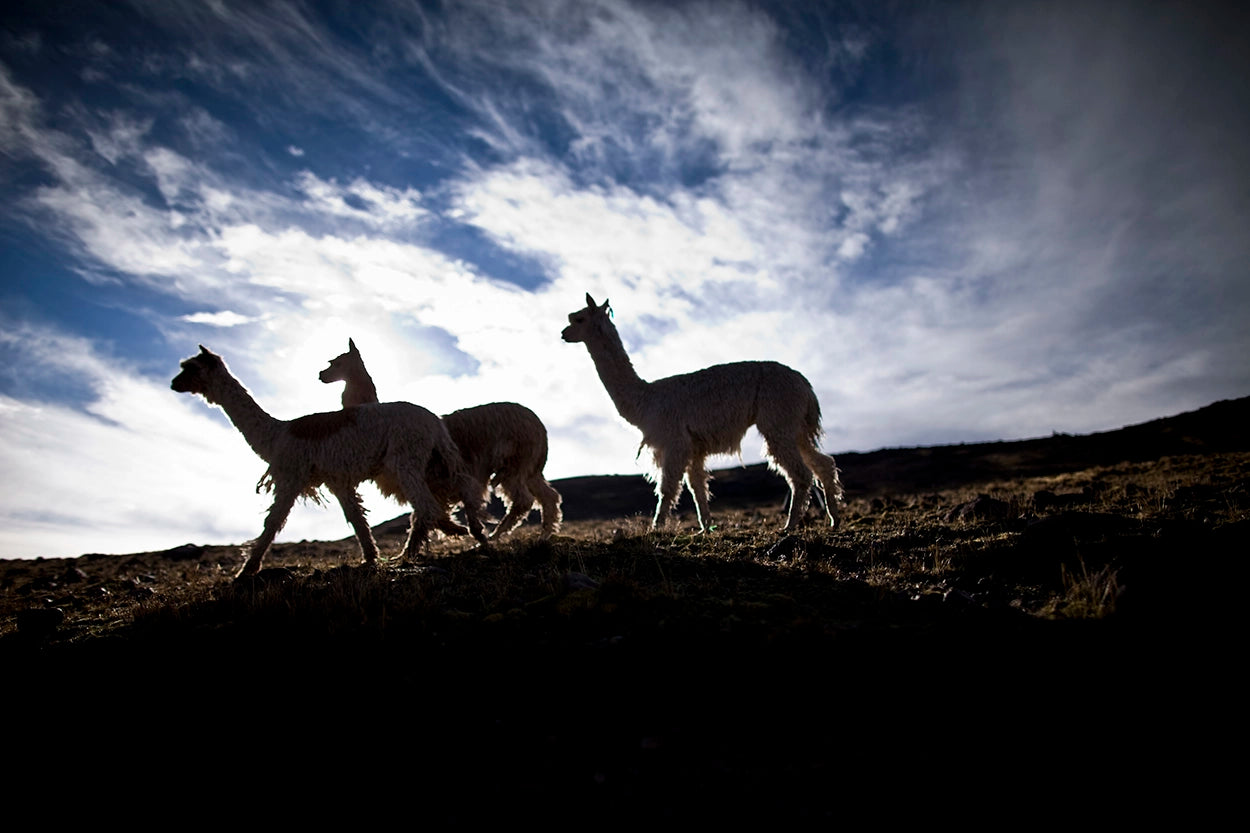
Alpaca wool, sourced from animals evolved under the intense high-altitude UV exposure of the Andes, offers not only comparable but often superior UV-blocking performance to Merino.
Scientific literature and empirical fiber studies indicate several unique properties that enhance alpaca’s photoprotective qualities:
- Longer and smoother fibers: These create less porous textiles, enhancing UV reflection [9].
- Semi-hollow structure: This facilitates both insulation and scattering of UV rays [10].
- Higher melanin content in dark fibers: Increases absorption of harmful radiation [9].
- Naturally high fiber density: Especially in 300+ GSM fabrics, limits UV penetration significantly [11].
Recent textile research suggests that alpaca wool fabrics—especially those in dark tones or higher GSM (grams per square meter)—can outperform Merino by approximately 10–20% in terms of UPF under comparable conditions, based on visible light absorption and UV radiation scattering [7,12].
Factors that affect UPF in Alpaca garments
- Weight and Density: Heavier and more tightly knitted alpaca wool fabrics block more UVR, especially when woven densely [12].
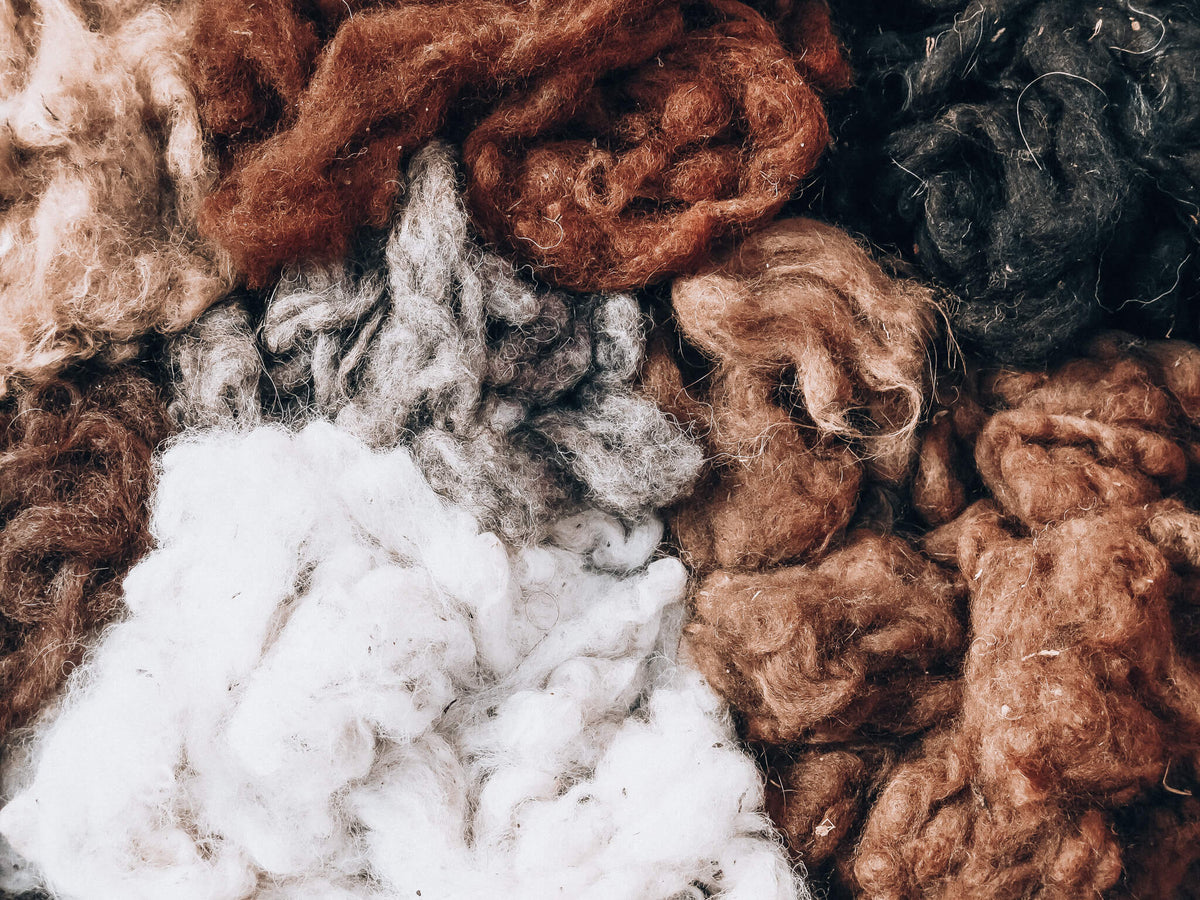
- Color and Natural Pigments: Darker fibers absorb more UV due to melanin concentration. Natural dyes like indigo and cochineal also enhance UV absorbance [11].
- Fabric Wetness and Stretch: Wet or stretched fabrics lose some UV resistance. However, alpaca retains more structure when damp compared to cotton or synthetics [13].
- Surface Smoothness: Smoother alpaca scales scatter UV rays more evenly, reducing hot spots or localized exposure [10].
How to maintain UPF in Alpaca garments
To preserve alpaca's natural UV-blocking properties:
- Wash cold with gentle detergent
- Avoid optical brighteners or chemical UV additives
- Dry flat, away from direct sun
- Do not bleach or stretch aggressively
These tips maintain fiber integrity and prevent disruption of the natural scales and pigment granules that enhance UV resistance.
Why Arms of Andes uses Alpaca for natural UV protection
At Arms of Andes, we work with 100% Alpaca wool—a premium fiber known for its softness, thermoregulation, and now, its UV-shielding capabilities. Whether for hiking at high altitudes or daily commuting under the sun, our garments offer reliable protection without plastic, synthetics, or chemicals.
Our lightweight 110gsm and 160gsm shirts are breathable yet effective for sun exposure during hot seasons The heavier 300 GSM and 420 GSM layers block maximum UV rays—ideal for mountain conditions or extended time outdoors.
UV protection in clothing is not just a convenience—it’s a health imperative. While Merino wool sets a strong standard, alpaca wool offers even greater UV protection with the added advantages of softness, durability, and environmental responsibility.
Protect your skin without harming the planet. Go natural. Go alpaca.
Sources (13)
- Lu JT, Ilyas E. An overview of ultraviolet-protective clothing. Cureus. 2022 Jul 27;14(7):e27333. doi:10.7759/cureus.27333
- AATCC. Transmittance or Blocking of Erythemally Weighted Ultraviolet Radiation through Fabric (TM 183) [Internet]. Research Triangle Park, NC: American Association of Textile Chemists and Colorists; [cited 2025 Jul 24]. Available from:https://members.aatcc.org/store/tm183/579/
- ASTM International. Standard Practice for Preparation of Textiles Prior to Ultraviolet (UV) Transmission Testing (D6544‑21) [Internet]. West Conshohocken, PA: ASTM; 2021 [cited 2025 Jul 24]. Available from:https://store.astm.org/d6544-21.html
- International Testing Association for Applied UV Protection. Certification of clothing or shading materials according to UV STANDARD 801 [Internet]. [cited 2025 Jul 24]. Available from:https://www.uvstandard801.com/en/certification
- Skin Cancer Foundation. Sun‑protective clothing [Internet]. [cited 2025 Jul 24]. Available from:https://www.skincancer.org/skin-cancer-prevention/sun-protection/sun-protective-clothing/
- Jasco Inc. Evaluation of UPF sun protection fabrics [Internet]. [cited 2025 Jul 24]. Available from:https://jascoinc.com/applications/evaluation-upf-sun-protection-fabrics/
- Algaba I, Riva A. Determinación in vitro del factor de protección UV de los textiles. Bol Intexter (UPC). 2002;(121):53. Spanish.
- International Wool Textile Organisation. IWTO Wool Notes 2024. Brussels: International Wool Textile Organisation; 2024. Available from:https://iwto.org/wp-content/uploads/2024/06/IWTO-Wool-Notes-2024.pdf
- Moore K. The impact of fleece characteristics on insulation and heat exchange, and the consequential effect on vitamin D of alpacas in southern Australia [dissertation]. Perth (AU): The University of Western Australia; 2015.
- Allain D, Renieri C. Genetics of fibre production and fleece characteristics in small ruminants, Angora rabbit and South American camelids. Animal. 2010 Sep;4(9):1472-81. doi: 10.1017/S1751731110000029
- Gawish SM, Helmy HM, Ramadan AN, Farouk R, Mashaly HM. UV Protection Properties of Cotton, Wool, Silk and Nylon Fabrics Dyed with Red Onion Peel, Madder and Chamomile Extracts. J Textile Sci Eng. 2016;6(4):1000266. doi:10.4172/2165-8064.1000266.
- McGregor BA. Properties, processing and performance of rare and natural fibres: a review and interpretation of existing research results [Internet]. Avenel, VIC: Rural Industries Research and Development Corporation; 2014 [cited 2025 Aug 4]. Available from: https://alpaca.asn.au/wp-content/uploads/2019/09/properties-processing-and-performance-of-rare-and-natural-fibres-a-review-and-interpretation-of-existing-research-results.pdf
- JASCO Corporation. Evaluation of UPF for Sun Protection Fabrics. Application Note 070-UV-0036. Available from:https://jascoinc.com/docs/application-notes/070-UV-0036_UPF%20RevRAL.pdf


