


Trail
The art of layering clothes: how to layer for the outdoors

What is layering?
Layering is a strategic method of wearing multiple garments, one on top of another, to regulate body temperature, maintain comfort, and adapt to changing environments. Unlike simply adding a thick jacket, the layering system is based on the physiological principles of thermoregulation, moisture transfer, and insulation efficiency [1,2].
Scientific studies have shown that the microclimate between skin and clothing is fundamental for comfort and performance. Clothing layers trap air, which acts as insulation, while fabric permeability influences how sweat and heat are managed [3,4]. For outdoor activities such as hiking, mountaineering, or skiing, this balance is critical not only for comfort but also for safety.
Why is layering clothes important for outdoor activities?
Greater warmth
Wearing several thin garments provides more effective insulation than a single thick layer. This is because each layer traps small pockets of air, which once warmed by body heat, act as a thermal barrier [5,6]. Experiments with thermal manikins confirm that multilayered clothing systems achieve higher overall insulation values precisely due to these layers of still air [7].
Freedom of movement
Layering with thin garments minimizes bulk and improves mobility—an essential factor in outdoor performance activities. In contrast, heavy single garments may restrict movement and accelerate fatigue, despite their insulating capacity [8].
Protection from the elements
Exposure to wind and rain significantly accelerates heat loss through convection and evaporation [9]. By incorporating an outer shell layer, these environmental factors are blocked from penetrating the inner system, thereby maintaining the insulating properties of the clothing ensemble [10].
Adaptability to environmental changes
Outdoor activities often involve rapid shifts in temperature and exertion. During climbs or high-intensity movement, the body generates excess heat, whereas during rest periods or descents, body temperature drops quickly. The layering system allows users to add or remove garments as needed, regulating comfort without compromising protection [11]. This adaptability is particularly critical in alpine conditions, where temperature variations can exceed 15°C within a single day.
The layers explained
Base layer – breathability is key
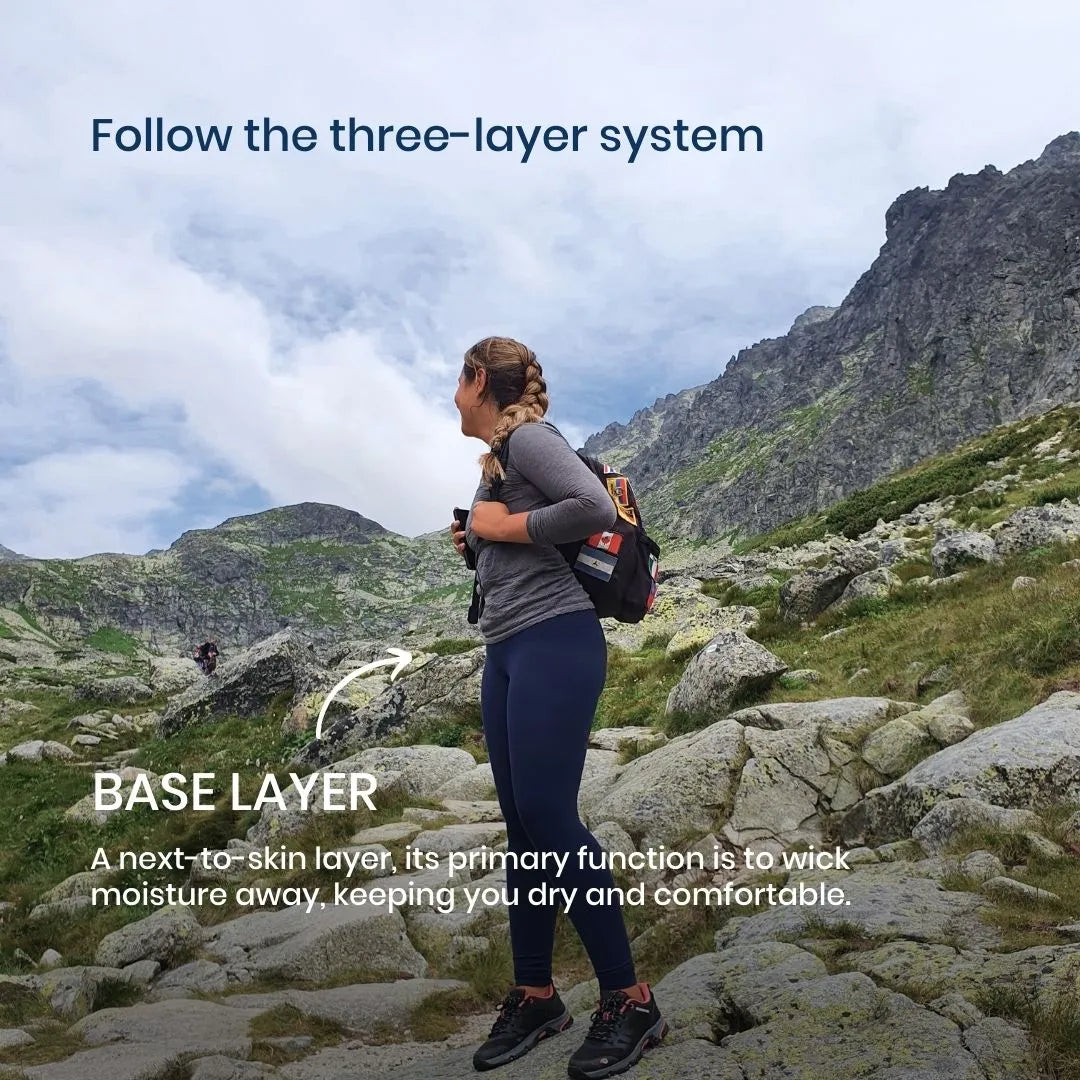
The base layer sits directly against the skin and its primary function is to manage moisture. By transporting perspiration away from the skin—a process known as moisture-wicking—it prevents the discomfort of wet fabric clinging to the body. Retained moisture not only causes chafing but also accelerates heat loss, which in cold conditions can lead to respiratory injuries [5,6]. While natural fibers such as alpaca wool retain part of their insulating capacity when damp, cotton loses it almost completely, explaining why post-exercise cooling is rapid when wearing cotton garments. Base layers are generally lightweight shirts, available with different sleeve lengths and design features, and their effectiveness depends more on breathability than on insulation [7].
Mid layer – it’s all about insulation
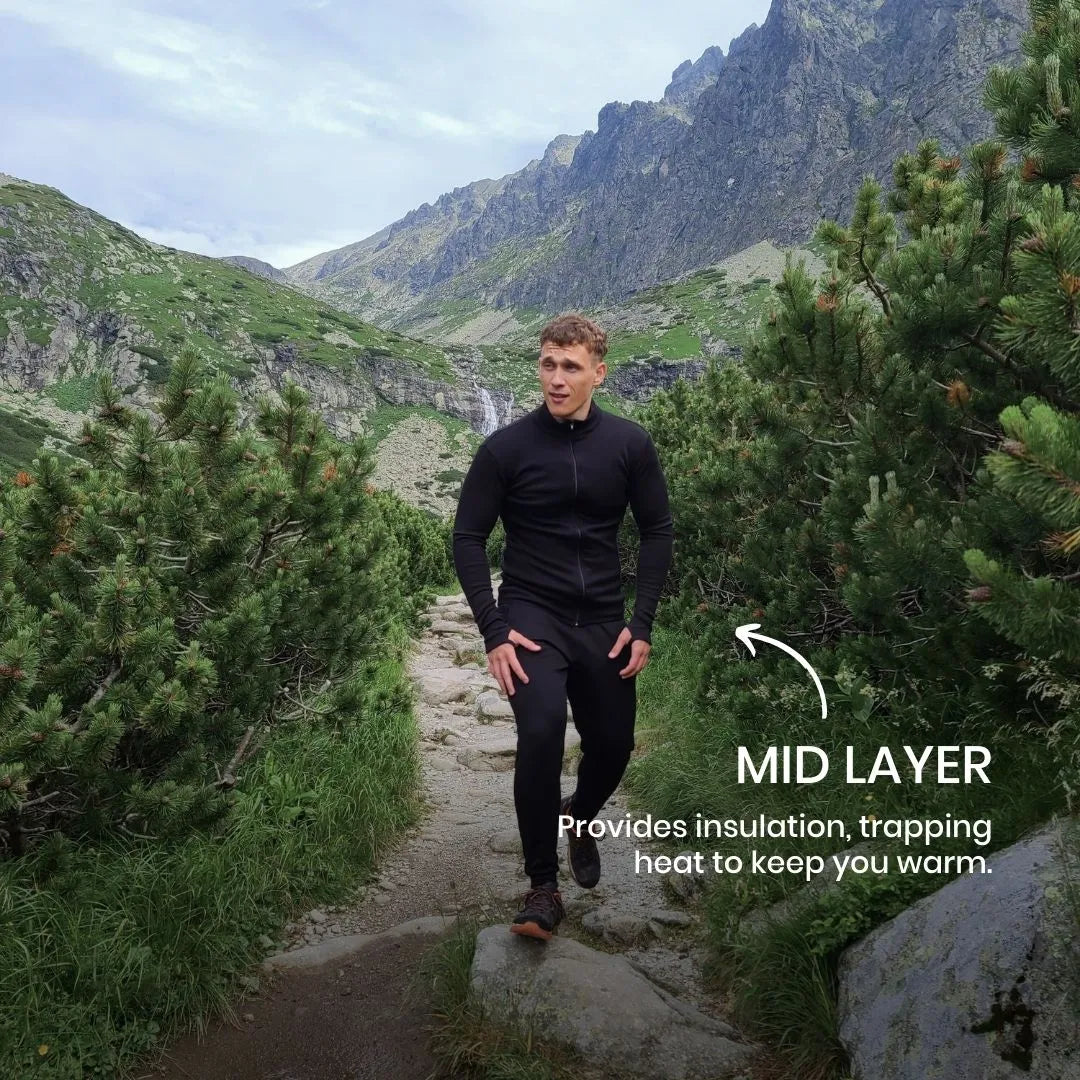
The role of the mid layer is to preserve warmth by trapping air that has been warmed by the base layer. To perform effectively, it must balance insulation with breathability; otherwise, moisture wicked away from the skin can accumulate, reducing thermal efficiency [7,8]. Wool-based mid layers, such as those made of alpaca or merino, are denser and warmer than synthetic fleeces, while puffy jackets rely on lofted fibers that create numerous insulating air pockets. The choice of mid layer depends on expected conditions and activity level, since excessive thickness can hinder movement and accelerate fatigue [8].
Outer shell – keep out the wind & rain
Even with adequate base and mid layers, wind and precipitation increase convective and evaporative heat loss dramatically [9]. The outer shell functions as a protective barrier, blocking these elements while allowing vapor to escape [10]. “Hard shells” provide waterproofing and windproofing, while “soft shells” focus on breathability and mobility. In all cases, the shell must fit comfortably over inner layers without restricting movement.
Underwear – the first line of defense
Underwear is often overlooked in layering systems, yet it follows the same principles as the base layer. Since it sits next to the skin, it should facilitate moisture management, prevent sweat retention, and regulate temperature changes in the fabric. Technical underwear made of alpaca wool or other breathable fabrics ensures comfort and reduces heat loss during both activity and rest [5,6].
Layers for legs
Layering is commonly discussed for the torso, but the lower body also benefits, especially in cold or wet conditions. While fewer layers are usually required for the legs, applying the same principles—breathable base, insulating mid, and protective shell—significantly enhances comfort. Core warmth often suffices for moderate activity, but in alpine or resting situations, leg insulation becomes crucial, particularly since temperature fluctuations can exceed 15 °C within hours [11].
Don't forget your extremities
- Head: Up to 10% of heat loss occurs through the head when uncovered in cold climates [12]. Layering with beanies and hoods reduces this effect.
- Hands: Gloves can also be layered (liners under waterproof shells) to balance dexterity and insulation [13].
- Feet: Sock layering reduces friction and blisters, while ensuring moisture management. Studies on sock textiles confirm that natural fibers reduce odor and improve comfort over time [14].

Final thoughts
Since each body, each area of the world, each season and each activity are so different, mastering the art of layering is always going to involve some amount of trial and error. Layering clothes is all about finding what works for you. This will depend on your body type, how your body reacts to the cold and, to some extent, your fitness and physical ability (a less fit person will generally have to work harder and therefore generate more body heat than someone in better shape). Your chosen activities, conditions on the day, and budget will also greatly influence the individual items you choose to buy and how you wear them together. All that said, the above principles and guidelines will give you a head start and help you to be more comfortable – and essentially safer – in cold and varied conditions.
Ultimately, mastering layering requires experimentation, but the underlying physiological principles are universal: moisture control, thermal insulation, and protection against the elements.
Sources (15)
- Holmer I. Protective clothing in hot environments. Ind Health. 2006;44(3):404-13.
- Havenith G. Interaction of clothing and thermoregulation. Exog Dermatol. 2002;1(5):221-30.
- Parsons K. Human Thermal Environments. 3rd ed. Boca Raton: CRC Press; 2014.
- McCullough EA, Jones BW, Tamura T. A data base for determining the evaporative resistance of clothing. ASHRAE Trans. 1989;95(2):316-28.
- Gagge AP, Stolwijk JA, Hardy JD. Comfort and thermal sensations. Science. 1967;157(3787):1557-8.
- Rossi RM. Textiles and human thermophysiological comfort in the cold. Ann Occup Hyg. 2001;45(4):239-46.
- Richards M. The thermal manikin: History and applications. Eur J Appl Physiol. 2005;94(5-6):641-8.
- Bartels V. Physiological comfort of protective textiles. In: Scott RA, editor. Textiles for protection. Cambridge: Woodhead Publishing; 2005. p. 371-400.
- Lotens WA. Heat transfer from humans wearing clothing [dissertation]. Eindhoven: Eindhoven Univ Technol; 1993.
- Havenith G, Heus R, Lotens WA. Resultant clothing insulation: a function of body movement, posture, wind, clothing fit and ensemble thickness. Ergonomics. 1990;33(1):67-83.
- Li Y. The science of clothing comfort. Text Prog. 2001;31(1):1-135.
- Gonzalez RR. Biophysics of heat exchange and clothing: applications to sports physiology. Med Sci Sports Exerc. 1987;19(5 Suppl):S162-70.
- Nielsen R, Endrusick TL. Sensitivity of the thermoregulatory system to changes in core temperature in man. J Appl Physiol. 1990;69(2):477-84.
- McQueen RH. Odor in textiles: a review of evaluation methods, fabric characteristics, and odor control. Text Res J. 2015;85(2):123-36.
- Chapagain AK, Hoekstra AY. The water footprint of cotton consumption. Value of Water Research Report Series No. 18. Delft: UNESCO-IHE; 2004.


